


Pharmacokinetics describes what the body does to a substance after it is taken: how it is absorbed, where it distributes, how it is broken down, and how it leaves the body. For kratom, most of these answers come from a small number of human studies and a larger body of animal and laboratory work. This page summarizes what controlled research has established about the pharmacokinetics of mitragynine, the most abundant kratom alkaloid, and flags clearly where human data remains limited.
What Does Pharmacokinetics Mean for Kratom?
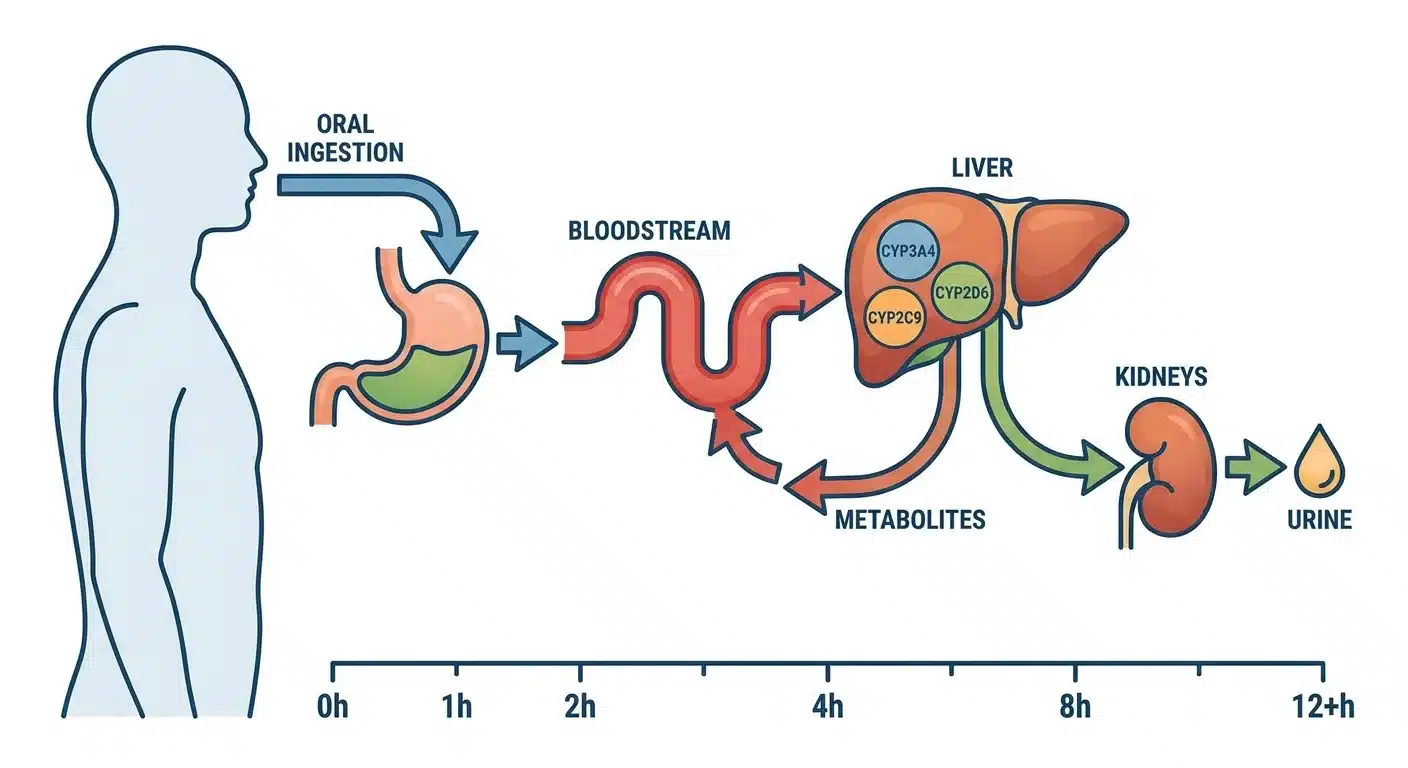
Pharmacokinetics is the study of how a substance moves through the body over time. It is usually broken into four stages, often abbreviated ADME: absorption (how the compound enters the bloodstream), distribution (where it travels in the body), metabolism (how it is chemically broken down), and excretion (how it and its breakdown products leave). Pharmacodynamics, by contrast, describes what the substance does to the body once it is there. This page is about the first set of questions, not the effects themselves.
For kratom, the pharmacokinetic picture centers on mitragynine, the most abundant alkaloid in Mitragyna speciosa leaf and consistently the dominant alkaloid across whole-leaf kratom products analyzed in the United States. [12] Kratom leaf contains dozens of additional alkaloids, several of which circulate in measurable amounts after ingestion and have their own distinct pharmacokinetics. Because mitragynine is the most studied and most abundant, it is the reference compound for most of what follows, but it is not the whole story. Where research has characterized other alkaloids, such as speciociliatine and 7-hydroxymitragynine, those findings are noted separately.
Two practical cautions apply throughout. First, controlled human pharmacokinetic data on kratom is limited to a handful of small studies, so reported averages carry wide confidence ranges. Second, the data below comes from defined research products and doses; commercially available kratom varies considerably in alkaloid content, so individual experiences will not map cleanly onto study numbers.
How Quickly and How Much Mitragynine Is Absorbed After Taking Kratom?
Absorption after oral kratom consumption of filtered kratom tea prepared from fresh kratom leaf is relatively fast. The first controlled human pharmacokinetic study undertaken in Southeast Asia was conducted in ten chronic kratom users dosed to steady state with kratom tea (average pharmacokinetic parameters were calculated from nine participants; one subject was analyzed separately based on an abnormal concentration-time profile). Mitragynine reached its maximum plasma concentration at a median time of about 0.83 hours, roughly 50 minutes after ingestion (Trakulsrichai et al. 2015). [1] A separate single-dose study in healthy Thai volunteers given kratom tea prepared from fresh leaf standardized to 23.6 mg of mitragynine measured a peak mitragynine concentration of approximately 159 ng/mL at a time to maximum concentration of about 0.84 hours (Mongar et al. 2024). [3] In US participants, a third study of a single 2 g dose of kratom prepared as a suspension (~40 mg mitragynine) in healthy adults reported a slightly later time to maximum concentration for mitragynine, in the range of 0.75-1.5 hours, most likely due to the slower absorption of alkaloids from the leaf that was consumed as part of the suspension (Tanna et al. 2022). [2]
These are oral kratom preparations consumed as tea or dried leaf powder suspensions, not isolated mitragynine, and the time to peak reflects the whole product. A pilot study (Prevete et al. 2025) looked at the pharmacokinetic parameters of orally administered synthetic mitragynine dissolved in lemon drink. At 1-hour post-dose, all participants in all dose groups (5, 10, 20 mg) were at maximum concentration, but only 4 blood serum samples were drawn, so the true time to maximum concentration cannot be estimated. [22]
Three additional studies have been performed with encapsulated kratom products. The first is an ascending single-dose study of 1, 3, 8, 10, and 12 g doses in fed participants (Reissig et al. 2026). The time to maximum concentration was variable for mitragynine with median values of 2-5 hours and a range across doses of 1.0-6.2 hours. [21] Another study (Huestis et al. 2024) looked at single and multiple daily doses of encapsulated kratom leaf in fasted participants (0.5, 1, 2, and 4 g) and found the median time to maximum concentration across single doses was 1.0-1.3 hours with a range of 0.8-5.0 hours. After 14 days of dosing, the median time to maximum concentration increased to 1.0-1.7 hours, but the range tightened up (0.8-4.0 hours). [19] A final study (Huestis et al. 2026) examined the pharmacokinetics of single and multiple daily doses of encapsulated kratom extract in fasted participants (39.5% mitragynine w/w) and found the median time to maximum concentration was not as variable as the whole leaf administration. After single-doses the range was 0.75-2.7 hours and after 14 days of dosing was 0.75-2.3 hours across doses. [20]
These results demonstrate that the time to maximum concentration is highly dependent upon the way kratom is consumed. Whole leaf products on average are going to take longer to absorb as the alkaloids must first be liberated from the leaf material prior to absorption. Having a meal with kratom also may increase the time it takes to reach maximum concentration, as evidenced by the longer times seen in the study where participants had eaten a high-fat meal prior to dosing (Reissig, 2026). Taken together, the human studies to date show a consistent theme: mitragynine appears in the blood within roughly one to two hours, and how alkaloids are delivered and what they are delivered with have the largest influence on time to peak concentration, with fresh-leaf tea in fasted participants absorbing fastest and whole-leaf powder in participants fed a high-fat meal tending to peak later. The relevant numbers for each single-dose study are summarized below, with each value tied to the study, route of administration, and population it came from.
| Product (Mitragynine Dose) | Sample Size | Tmax (hr) | Cmax/Dose (ng/mL/mg) | AUC/Dose (hr*ng/mL/mg) | Vz/F (L) | t1/2 (hr) |
|---|---|---|---|---|---|---|
| Fresh leaf tea (6.25-23 mg) | N=9; male; Thai chronic users | 0.83 | – | – | 2940 | 23.2 |
| Fresh leaf tea (23.6 mg) | N=16 (15 analyzed); 5M, 11F; Thai, kratom naive | 0.84 | 6.71 | 39.8 | 521 | 8.7 |
| Synthetic mitragynine drink (5-20 mg)* | N=8; 3F, 5M; Caucasian; kratom naïve | ~1 | 1.1-1.6 | – | – | – |
| Dried kratom leaf in water (39 mg) | N=7; 3M, 4F; previous kratom exposure | 1 | 0.84 | 4.3 | 12700 | 45.3 |
| Encapsulated dried leaf (6.65-53.2 mg) | N=12-13, M and F variable but around 50% split; kratom naive | 1.0-1.3 | 2.1-2.6 | 7.9-17.1 | 1349-3788 | 3.7-42.9 |
| Encapsulated dried leaf (10.4-125.3 mg)** | N=40, 8/cohort (6 active, 2 placebo); M and F not tabulated; recreational polydrug users | 2.0-5.0 | 2.4-4.0 | 23.3-31.2 | 811-1075 | 15.9-22.1 |
| Encapsulated leaf extract (9.9-59.2 mg) | N=12; 1:1 M:F, kratom naïve | 1.3 | 3.2-3.3 | 11.6-21.5 | 2649-5113 | 13.5-54.7 |
Now that we know how quickly mitragynine reaches the blood stream, a related question is how much mitragynine reaches the bloodstream. Direct human bioavailability data do not exist, but a controlled rat study measured it by comparing mitragynine exposure after oral administration of various kratom preparations versus mitragynine exposure after intravenous dosing of purified mitragynine. Avery et al. found the absolute oral bioavailability of mitragynine to be about 17 percent for isolated mitragynine, roughly 25 percent when given as lyophilized kratom tea, and about 31 percent as a concentrated organic fraction of kratom leaf. [14] A bioavailability well below 100 percent indicates degradation in stomach acid, incomplete absorption, and/or substantial first-pass loss, meaning much of an oral dose is lost before reaching systemic circulation, consistent with the significant metabolic clearance described later on this page. Notably, the whole-leaf matrix improved mitragynine exposure relative to the isolated alkaloid, which the authors attributed to other tea constituents affecting absorption and gastrointestinal transit. In the best direct comparison of this phenomenon in humans, the studies looking at encapsulated leaf versus encapsulated kratom extract can be compared. The maximum concentration when corrected for dose after leaf administration ranges from 2.1-2.6 compared to 3.2-3.3 for encapsulated extract administration. So, there is a difference in the maximum mitragynine concentration between leaf and extract in humans, confirming the earlier studies in rats. Examining the exposure of mitragynine in the body over time between single doses of leaf and extract, the difference was not as significant and the dose corrected ranges were nested: 7.9-17.1 for leaf and 11.6-21.5 for extract. Similar trends were seen after two weeks of daily dosing with dose corrected maximum concentrations of 2.5-3.2 for leaf and 2.8-4.7 for extract; meaning extract produces higher peak concentrations of mitragynine upon multiple daily doses. The dose corrected exposure for the highest dose of extract (28.0) was significantly higher than its matched dose of leaf (18.0) while those for the lower doses were similar (18.9 vs 17.2 for 29.6 mg extract and 26.6 mg leaf; 13.1 vs. 13.2 for 9.9 mg extract and 13.3 mg leaf).
One detail worth emphasizing is dose linearity. Linear pharmacokinetics means that, within the studied range, doubling the dose roughly doubles the plasma exposure rather than producing a disproportionate jump. Trakulsrichai et al. specifically tested whether mitragynine pharmacokinetics scale predictably with dose (6.25-23 mg) in chronic users and concluded that they do, describing the data as consistent with linear kinetics and a two-compartment oral model. [1] But in more recent studies, this linearity holds true only for low doses of mitragynine (regardless of the product type). At doses above 30 mg mitragynine as either encapsulated kratom leaf or extract, the exposure/dose ratio rose with increasing doses indicating supra-proportional pharmacokinetics (Huestis et al. 2024, 2026), while doses above 8 grams of leaf in a study of fed participants saw a plateau in exposure indicating a potential saturation in absorption (Reissig et al. 2026). [19], [20], [21] Additionally, accumulation of mitragynine has been seen after multiple daily doses, which should be considered when consuming kratom as part of a daily routine.
Where Does Mitragynine Distribute in the Body?
Once absorbed, mitragynine distributes widely. The apparent volume of distribution reported by multiple studies is variable and large with a range of 521-12700 L. [1] A volume of distribution far larger than total body water (~40 L) indicates that the compound does not stay in the bloodstream but partitions extensively into tissues. This is consistent with mitragynine being a lipophilic molecule that crosses cell membranes readily.
Human plasma concentration-time profiles for mitragynine are best described by a two-compartment model, reported in both Trakulsrichai et al. and Tanna et al. [1] [2] In practical terms, a two-compartment model means the compound moves from the blood into a peripheral tissue compartment and back, producing an initial rapid decline in plasma concentration followed by a slower terminal phase. The slow terminal phase contributes to the long half-life of mitragynine.
Kratom alkaloids differ from one another in distribution depending on their stereochemistry. The earliest work to describe the influence of stereochemistry on the pharmacokinetics of kratom alkaloids was Beckett & Morton in 1967 [18]. This has been confirmed in more recent work when Tanna et al. reported pharmacokinetic differences between alkaloids with a 3S configuration (mitragynine, speciogynine, paynantheine) and those with a 3R configuration (mitraciliatine, speciociliatine, isopaynantheine). [2] The 3S alkaloids showed a higher apparent volume of distribution than the 3R alkaloids in the same participants. The authors attributed these differences to factors including plasma protein binding, blood-to-plasma partitioning, and metabolism. This is one reason the pharmacokinetics of whole kratom cannot be reduced to a single alkaloid: different alkaloids in the same dose behave differently.
These differences also show up in how much of each alkaloid circulates in the blood. After mitragynine, the most abundant leaf alkaloids are speciociliatine, paynantheine, and speciogynine, while other minor alkaloids each make up less than 1 percent of the alkaloid fraction. Leaf abundance is a poor guide to circulating levels, however: speciociliatine is a minor leaf constituent yet appears as the most abundant alkaloid in human plasma after oral kratom consumption, and as a group the 3R alkaloids show higher plasma exposure corrected for dose ratios and much smaller apparent volume of distribution than the 3S alkaloids. [2] Whether these co-occurring alkaloids contribute meaningfully to kratom’s overall activity is a separate, pharmacodynamic question outside this page’s scope; data on their individual potencies and effects remain limited, but researchers have noted they may act together rather than in isolation. [2]
Direct measurements indicate that kratom alkaloids are highly bound to plasma proteins. Using equilibrium dialysis in human plasma, Obeng et al. measured mitragynine and speciociliatine at greater than 97 percent protein bound, leaving only a small unbound fraction circulating free. [17] The same study reported 7-hydroxymitragynine to be about 90 percent bound, a figure the authors took from earlier literature rather than measuring directly. Extensive protein binding is one of the factors the stereochemistry comparison above invoked to explain why different alkaloids in the same dose distribute and clear at different rates, but as both mitragynine and speciociliatine are highly bound, metabolism and partitioning differences may be more influential than binding on the pharmacokinetics of these individual alkaloids.
Animal work supports brain penetration of mitragynine, which is expected for a centrally active lipophilic compound. Using in vivo microdialysis in rats, Kong et al. measured the ratio of brain to plasma exposure for mitragynine after intravenous dosing at about 66 percent, indicating that a substantial fraction of circulating mitragynine crosses the blood-brain barrier. [15] Other studies have looked at the brain to plasma ratios after subcutaneous and oral dosing of mitragynine and found them to be ~1-2 confirming that mitragynine easily crosses the blood brain barrier. Quantitative human brain exposure has not been characterized, however, and because the directly relevant human distribution data is limited to plasma measurements, statements about tissue-specific concentrations in humans remain inferences rather than measurements.
Which Enzymes Break Mitragynine Down?
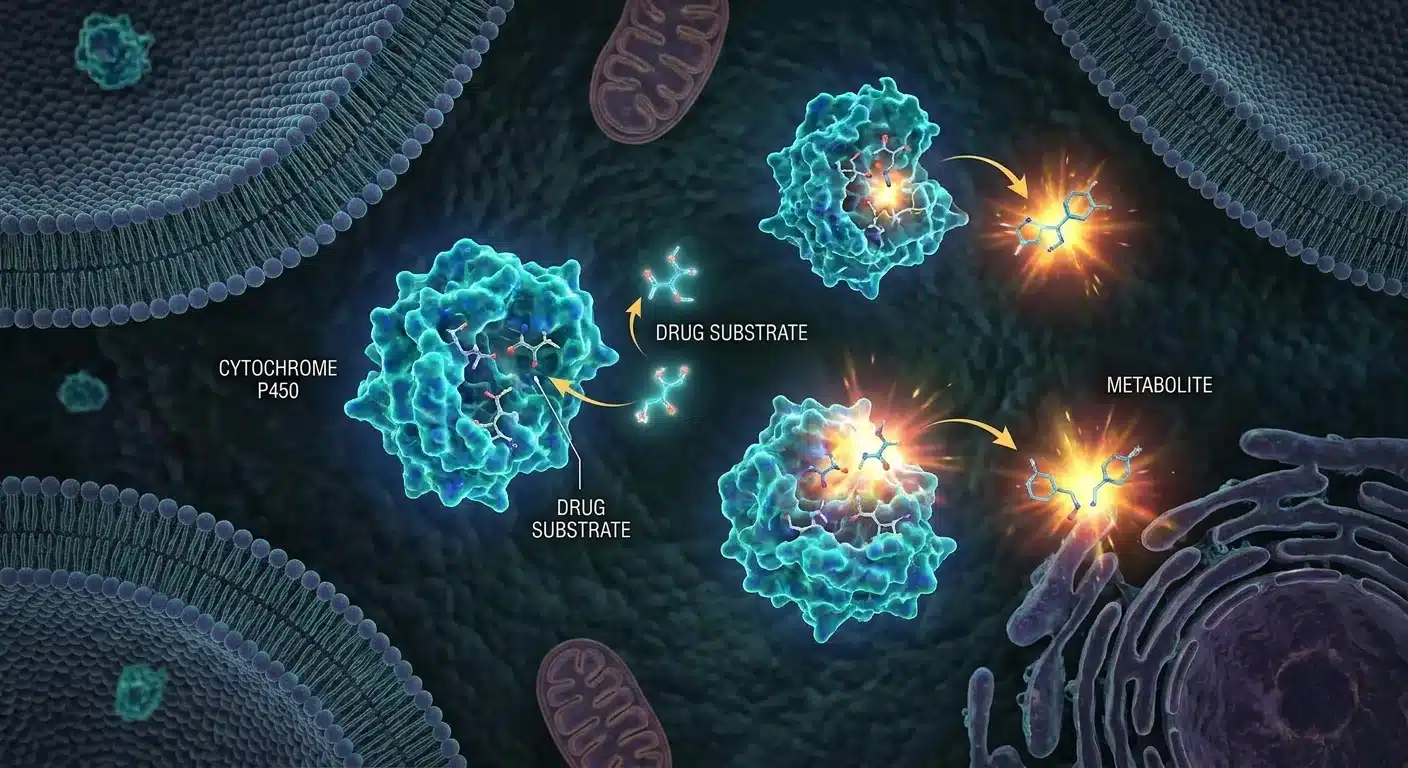
Mitragynine is metabolized primarily in the liver, and the dominant enzyme is cytochrome P450 3A4 (CYP3A4), with minor contributions from CYP2D6 and CYP2C9. This has been established through in vitro studies using human liver microsomes and hepatocytes (Kamble et al. 2019). [4] Metabolism proceeds through several pathways, the most quantitatively important of which is O-demethylation to form 9-O-demethylmitragynine (also called 9-hydroxycorynantheidine). In a human liver S9 fraction study, 9-O-demethylmitragynine accounted for roughly 36 percent of total mitragynine metabolism and was confirmed to be CYP3A-dependent, since the CYP3A index inhibitor ketoconazole significantly reduced its formation (Melchert et al. 2024). [5] That study reported an in vitro Michaelis constant (Km) of 1.37 µM for this pathway.
A separate and pharmacologically notable pathway is the oxidation of mitragynine to 7-hydroxymitragynine, also mediated by CYP3A4. This metabolite is covered in detail in the next section because its formation and exposure have been measured directly in humans.
Other alkaloids follow similar enzymatic routes. Speciociliatine, a diastereomer of mitragynine that is the major circulating alkaloid in humans after oral kratom consumption, is metabolized predominantly by CYP3A4 with a minor CYP2D6 contribution, through monooxidation and O-demethylation (Kamble et al. 2022). [7] That study also found speciociliatine to be metabolized more slowly in human hepatocytes (in vitro half-life of 92 minutes) than in monkey, rat, or mouse hepatocytes, a species difference that is relevant when interpreting animal data.
| Pathway / product | Primary enzyme | Evidence level | Source |
|---|---|---|---|
| O-demethylation to 9-O-demethylmitragynine (~36% of metabolism) | CYP3A4 | In vitro (human liver S9) | Melchert 2024 |
| Oxidation to 7-hydroxymitragynine (active metabolite) | CYP3A4 | In vitro + in human | Kamble 2019; Mongar 2024 |
| Overall mitragynine metabolism | CYP3A4 (major), CYP2D6 and CYP2C9 (minor) | In vitro (human microsomes/hepatocytes) | Kamble 2019 |
| Speciociliatine metabolism | CYP3A4 (major), CYP2D6 (minor) | In vitro (human hepatocytes/microsomes) | Kamble 2022 |
| 7-hydroxymitragynine to mitragynine pseudoindoxyl (human-predominant) | Non-enzymatic / plasma conversion | In vitro (human plasma) | Kamble 2020 |
Most pathway-mapping data come from in vitro human liver preparations. The 7-hydroxymitragynine pathway is one of the few confirmed in humans in vivo. Enzyme assignments describe which enzyme catalyzes the step, not the percentage of an ingested dose that follows it.
One additional human-specific observation matters for interpreting cross-species data. In human plasma, 7-hydroxymitragynine is unstable and is converted to a further metabolite, mitragynine pseudoindoxyl, to a much greater extent than in mouse, rat, dog, or monkey plasma (Kamble et al. 2020). [6] This means that some metabolic steps observed in humans are not well represented in standard animal models, which is a recurring caveat when applying preclinical pharmacokinetics to people.
How Much Mitragynine Converts to 7-Hydroxymitragynine in the Body?
7-hydroxymitragynine (7-OH) is an active metabolite of mitragynine, meaning the body produces it from mitragynine after ingestion, and it has greater efficacy at the µ-opioid receptor than mitragynine does. [13] The question of how much forms in humans was, until recently, unanswered. The human metabolite to parent ratio of 7-OH from mitragynine is summarized in the table below.
| Kratom Product | Dose Mitragynine (mg); frequency | Cmax, 7-OH/Cmax,Mitragynine | AUC7-OH/AUCMitragynine |
|---|---|---|---|
| Fresh leaf prepared into a filtered tea* | 23.6, single dose | 0.08 | 0.18 |
| Kratom leaf-powder suspension (steeped, unfiltered) | 39; single dose | 0.20 | 0.25 |
| Encapsulated dried leaf | 6.65-53.2; single dose | 0.17-0.30 | 0.14-0.30 |
| Encapsulated dried leaf | 6.65-53.2; multiple daily doses | 0.13-0.20 | 0.12-0.17 |
| Encapsulated dried leaf | 10.4-125.3; single dose | 0.15-0.17 | 0.14-0.21 |
| Encapsulated leaf extract | 9.9-59.2; single dose | 0.15-0.21 | 0.12-0.21 |
| Encapsulated leaf extract | 9.9-59.2; multiple daily doses | 0.12-0.20 | 0.13-0.16 |
In the studies that report 7-OH concentrations in North American participants, single-doses of kratom produce maximum concentration and exposure ratios of 7-OH to mitragynine of 12-30% across doses and product types. These values decrease a few percent upon multiple dosing, due to the accumulation of mitragynine. It is important to read these as exposure ratios between the two circulating compounds, not as the fraction of the ingested mitragynine dose that is converted; those are different quantities, and the percentage of dose converted was not what the study reported.
A Thai study confirmed that CYP3A4 is the enzyme responsible for the conversion of mitragynine to 7-OH. When volunteers were pretreated with itraconazole, a CYP3A4 inhibitor, at 200 mg per day for four days, 7-OH peak concentrations fell by about 56 percent and exposure fell by about 43 percent, while mitragynine peak concentration rose by about 1.5-fold. [3] The direction of this effect is worth stating plainly: inhibiting CYP3A4 reduces the formation of 7-OH and moderately raises mitragynine, because the enzyme that converts one into the other is blocked. This is the opposite of what is sometimes assumed.
Animal pharmacokinetic work helps put the metabolite contribution in perspective. In mice given equianalgesic oral doses, Berthold et al. 2022 found that when 7-OH was generated as a metabolite of mitragynine, the maximum brain concentration of 7-OH was about 11-fold lower than when 7-OH was administered directly. [8] On that basis, the authors concluded that metabolically formed 7-OH made a negligible contribution to the antinociceptive (pain-blocking) effect of mitragynine in that mouse model, measured by the hotplate assay. This is a species- and endpoint-specific finding, not a direct statement about human subjective effects, but it illustrates that the existence of a conversion pathway does not by itself establish that the metabolite drives the experience.
For consumers, the practical upshot is that whole-leaf kratom consumption produces a modest amount of 7-OH internally as a normal part of metabolism, at exposures that are a fraction of the parent mitragynine. This is categorically different from concentrated or isolated 7-OH products, which deliver milligram quantities of the metabolite directly. The difference described here is one of internal exposure magnitude; whether and how that translates into different effects or risks is a pharmacodynamic question that pharmacokinetic data alone cannot answer. Our separate guide on 7-hydroxymitragynine covers that distinction in detail.
How Long Does Mitragynine Stay in Blood Plasma?
The terminal half-life of mitragynine, the time it takes for its plasma concentration to fall by half during the elimination phase, is long and notably variable between people. Trakulsrichai et al. reported an average terminal half-life of about 23.2 hours, with a large standard deviation of roughly 16 hours, in chronic users. [1] Tanna et al. reported a terminal half-life in the range of 24 to 45 hours for the 3S alkaloids, including mitragynine, after a single 2 g dose of dried kratom leaf in water. [2] Other studies of encapsulated kratom products have found a half-life for mitragynine of 14.6-48.6 hours, with a decreased half-life at lower doses due in part to analytical method sensitivity. So, the half-life average is a bit more than a day, though there is variation between individuals.
The steep decline post maximum concentration and the shallow terminal phase is characteristic of the two-compartment behavior described earlier. And this brings up an important practical distinction: the time over which someone feels effects is governed largely by the early phase of the curve, whereas the time over which the compound remains detectable in the body is governed by the long terminal phase. These are different questions, and we cover detection windows and felt duration separately in how long kratom stays in your system and how long kratom lasts.
A long half-life relative to typical dosing intervals also implies the potential for accumulation with frequent repeat dosing. If a compound is dosed again before the prior dose has substantially cleared, plasma concentrations build toward a steady state over several half-lives. After 15 days of dosing either encapsulated kratom leaf or kratom extract (Huestis et al. 2024, 2026), moderate mitragynine accumulation was demonstrated (1.4-2.2 fold exposure increase versus a single-dose across doses and products) and it took 8-9 days to get to steady-state concentrations – broadly consistent with a half-life of 24-30 hours. [19], [20] The degree of accumulation in any given person depends on their dose, frequency, and individual clearance, none of which are captured by a single half-life number.
How Is Kratom Cleared From the Body?
Elimination of mitragynine is overwhelmingly metabolic rather than through excretion of the unchanged compound. Trakulsrichai et al. measured the amount of unchanged mitragynine recovered in urine over 24 hours and found only about 0.14 percent of the dose, indicating that direct renal excretion of intact mitragynine is a trivial route. [1] In Tanna et al. 2022, this was confirmed, as 0.10 percent of the administered dose of mitragynine excreted unchanged in urine over 120 hours. The overwhelming majority of a mitragynine dose is therefore handled by hepatic metabolism, through the CYP3A4-dependent pathways described above, with the resulting metabolites and their conjugates eliminated thereafter.
This hepatic-dominated clearance has a direct consequence: anything that changes CYP3A4 activity has the potential to change how quickly mitragynine (and other kratom alkaloids) is cleared and how much metabolite is formed. The itraconazole result in Mongar et al., where a CYP3A4 inhibitor raised mitragynine and lowered 7-OH, is the clinical demonstration of exactly this mechanism. [3] By contrast, because so little intact mitragynine appears in urine, kidney function is not the primary determinant of mitragynine clearance in the way it would be for a renally cleared drug.
It is worth being explicit about a limitation here. The mass balance of kratom in humans, meaning a full accounting of how much of an ingested dose is recovered as which metabolites through which routes, has not been comprehensively characterized in the way it would be for an approved pharmaceutical. The 0.10-0.14 percent urinary figure for mitragynine is a measured data point; the complete elimination profile is still being assembled from in vitro and partial in vivo studies.
Why Do the Pharmacokinetic Parameters Vary So Much Between People?
The large standard deviations in the human studies are not noise; they reflect genuine sources of variability. Several are worth understanding.
| Source | Why it matters |
|---|---|
| CYP3A4 activity | The main enzyme for mitragynine metabolism. Activity varies between individuals and can be altered by other drugs, foods, and supplements that inhibit or induce it. |
| Product alkaloid content | Commercial kratom varies widely in mitragynine content across hundreds of US products, so the same scoop can deliver very different doses (Sharma 2025). |
| Alkaloid stereochemistry | 3S and 3R alkaloids in the same product distribute and clear at different rates (Tanna 2022), so whole-product kinetics are a blend. |
| Co-administered substances | CYP3A4 inhibitors reduce 7-OH formation and raise mitragynine (Mongar 2024); cannabidiol raised mitragynine exposure ~2.8-fold in rats (Berthold 2024). |
| Chronic vs occasional use | Steady-state kinetics differ from a single dose (Huestis 2024, Huestis 2026) |
The co-administration data deserve a closer look because they are directly measured. In Mongar et al., a CYP3A4 inhibitor produced large, predictable shifts in both mitragynine and 7-OH. [3] In a controlled rat study, Berthold et al. 2024 found that concomitant cannabidiol increased mitragynine exposure roughly 2.8-fold and delayed its time to peak, with similar increases in several minor alkaloids. [9] That cannabidiol finding is from rats, not humans, so it should be read as a mechanistic signal warranting caution rather than a quantified human interaction. A rat study by Kamble et al. 2023 adds an important species caveat: blocking CYP3A with ketoconazole raised exposure to both mitragynine and 7-OH, which led the authors to conclude that in rats CYP3A clears both compounds and that 7-OH is formed substantially by routes other than CYP3A. [10] The point that holds across species is that CYP3A is central to the disposition of mitragynine and its active metabolite; the net direction of the effect on 7-OH levels, however, depends on whether enzyme inhibition acts more on the formation of 7-OH, as in the human data, or on its clearance, as in this rat study.
Product variability is the source most within a consumer’s control. A 2025 analysis of 341 kratom products available in the United States documented wide variation in alkaloid content between products labeled similarly (Sharma et al. 2025). [12] Because plasma exposure scales with the actual mitragynine dose, two products at the same gram weight can produce meaningfully different pharmacokinetic outcomes. A certificate of analysis stating the measured mitragynine content is the only reliable way to know the dose being consumed.
Two further sources of between-person variability follow from the metabolism described earlier, though neither has been directly studied for kratom. First, the minor metabolic pathways involve CYP2D6, an enzyme that varies widely between people for genetic reasons, with recognized poor-metabolizer and ultrarapid-metabolizer phenotypes. Because CYP2D6 is only a secondary contributor to mitragynine metabolism behind CYP3A4, genetic CYP2D6 variation is expected to affect mitragynine less than it affects drugs that rely on CYP2D6 as their main clearance route. Second, because mitragynine clearance is overwhelmingly hepatic and CYP3A4-dependent, conditions that reduce liver enzyme capacity, such as significant hepatic impairment or advanced age, would in principle slow its clearance and raise exposure. Both of these are mechanistic expectations drawn from the enzymology rather than measured results, since controlled pharmacokinetic studies in those specific populations have not been conducted for kratom.
Can Kratom Change How Other Medications Are Metabolized?
The same enzymes that clear mitragynine are shared by many prescription medications, which raises the possibility of pharmacokinetic drug interactions in the other direction: kratom affecting other drugs. A 2023 review by Tanna et al. examined the aggregate in vitro and clinical evidence and identified kratom and several of its alkaloids as inhibitors of CYP2D6 and CYP3A enzyme activity, as well as P-glycoprotein-mediated transport. [11] They followed this up with a clinical study in 2023 using a 2 gram dose of kratom mixed with water and the probe drugs dextromethorphan (CYP2D6) and midazolam (CYP3A). Findings from this study showed that a 2 gram dose of kratom was a modest inhibitor of CYP3A – raising both the maximum concentration (1.5 fold) and exposure (1.4 fold) of midazolam. The interaction with CYP3A was driven by intestinal CYP3A as the half-life of midazolam was unchanged. The pharmacokinetics of dextromethorphan were unchanged despite in vitro assays suggesting this would be the dominant drug-drug interaction with kratom. This study demonstrates that a modest dose of kratom increased the systemic exposure of co-consumed drugs relying on CYP3A metabolism in the gut, which is one proposed mechanism behind some of the polysubstance cases reported in the toxicology literature.
Because this topic is large and specific to individual medications, we treat drug interactions as their own subject rather than resolving it here. Anyone taking prescription medication, particularly drugs metabolized by CYP3A in the gut, or drugs with a narrow margin between effective and harmful doses, should consult a qualified healthcare provider or pharmacist before combining them with kratom. This page describes mechanism, not clinical guidance for any particular combination.
Frequently Asked Questions
How long does it take for kratom to reach peak levels in the blood?
In human studies, mitragynine reached its maximum plasma concentration quickly after oral kratom administration in the fasted state, with a reported median time to peak of roughly 0.8 to 2 hours depending on the study and the product. Trakulsrichai et al. measured about 0.83 hours in chronic users at steady state, and Mongar et al. measured about 0.84 hours after a standardized kratom tea, while Tanna et al. reported 1 to 2 hours for mitragynine after a single 2 g dose. These figures describe when the compound peaks in the blood, which is not the same as when effects begin or end. The active metabolite 7-hydroxymitragynine peaks slightly later, at about 1.8 hours in the Mongar study. Under fed conditions, the time to maximum concentration increases to 2-5 hr as reported in the Reissig study of 1-12 g of encapsulated kratom.
What is the half-life of mitragynine?
Two human studies place the terminal half-life of mitragynine at roughly a day, but with wide variation. Trakulsrichai et al. reported an average of about 23.2 hours with a standard deviation near 16 hours, and Tanna et al. reported 24 to 45 hours for mitragynine after a single dose of 2 g kratom suspended in water. The terminal half-life describes the slow elimination phase, not how long effects are felt. The large variation between people reflects genuine differences in metabolism, dose, product, and frequency of use, so a single number should be treated as a research average rather than a precise personal value.
Which enzyme metabolizes kratom?
The primary enzyme is cytochrome P450 3A4 (CYP3A4), based on studies in human liver microsomes and hepatocytes, with smaller contributions from CYP2D6 and CYP2C9. CYP3A4 drives the major O-demethylation pathway that forms 9-O-demethylmitragynine, which accounts for roughly 36 percent of mitragynine metabolism in vitro, and it also produces the active metabolite 7-hydroxymitragynine. Because CYP3A4 is central to mitragynine clearance, substances that inhibit or induce this enzyme have the potential to change how kratom is metabolized. This was demonstrated directly in humans when a CYP3A4 inhibitor raised mitragynine levels and lowered 7-hydroxymitragynine.
Does mitragynine turn into 7-hydroxymitragynine in the body?
Yes, partly. Mitragynine is converted to 7-hydroxymitragynine by CYP3A4, and this conversion has been measured directly in healthy volunteers. In the Mongar study, the peak concentration of 7-hydroxymitragynine was about 9 percent of mitragynine, and its total exposure was about 20 percent of mitragynine. These are exposure ratios between the two circulating compounds, not the percentage of the ingested dose that converts. The amount produced this way from whole-leaf kratom is far smaller than what isolated 7-hydroxymitragynine products deliver directly, which is a key reason the two are not pharmacologically equivalent.
Does kratom build up in your system with repeated use?
Because mitragynine has a relatively long terminal half-life, on the order of a day, dosing again before a previous dose has cleared can lead to accumulation toward a steady-state level over several half-lives. This is why one human study deliberately brought chronic users to steady state before measuring their pharmacokinetics. The degree of accumulation depends on the individual’s dose, frequency, and clearance rate, so it varies widely. In controlled clinical trials of 15 days dosing of 0.5-4 g of encapsulated kratom leaf, the exposure accumulation ratios were moderate (1.6-1.9). This pharmacokinetic accumulation is a separate question from tolerance, which is a pharmacodynamic adaptation; our tolerance guide covers that distinction.
How is kratom eliminated from the body?
Kratom is cleared mainly through liver metabolism, not through excretion of the unchanged compound. In one human study, only about 0.14 percent of the mitragynine dose was recovered as unchanged drug in urine over 24 hours, meaning the kidneys play a minor role in removing intact mitragynine. The bulk of a dose is metabolized by CYP3A4 into compounds such as 9-O-demethylmitragynine and 7-hydroxymitragynine, which are then eliminated. A complete mass-balance accounting of every metabolite and route in humans has not yet been published.
Can kratom interact with prescription medications?
There is a plausible mechanism. A 2023 review identified kratom and some of its alkaloids as inhibitors of CYP2D6, CYP3A, and P-glycoprotein, all of which are involved in clearing many prescription drugs. Inhibiting these pathways could increase the blood levels of co-administered medications that rely on them, which is one proposed explanation for some polysubstance toxicity reports. In a clinical drug-drug interaction study, a 2 g dose of kratom inhibited CYP3A metabolism of the probe drug midazolam (1.5x maximum concentration; 1.4x exposure) but did not affect the pharmacokinetics of the CYP2D6 probe drug dextromethorphan. Anyone on prescription medication, especially CYP2D6 or CYP3A4 substrates that have significant gut metabolism or narrow-therapeutic-index drugs, should consult a healthcare provider before combining them with kratom.
Does CBD change how kratom is metabolized?
In a controlled rat study, concomitant cannabidiol increased mitragynine exposure roughly 2.8-fold and delayed its time to peak, along with increases in several minor alkaloids. This suggests cannabidiol can slow kratom metabolism enough to raise and delay its effects. Importantly, this finding is from rats, not humans, so the human magnitude is unknown and the result should be read as a caution rather than a quantified interaction. A separate in vitro study found that cannabinoids had only minor effects on one mitragynine metabolic pathway, so the overall human picture is not yet settled.
Why do two people react so differently to the same amount of kratom?
Pharmacokinetic variability is one major reason. Individual differences in CYP3A4 activity, the actual mitragynine content of the specific product, whether the person uses kratom regularly or occasionally, and any co-consumed substances all affect how much mitragynine reaches the blood and how long it stays there. Human studies report wide standard deviations precisely because of these factors. Product variability is especially important: an analysis of 341 US kratom products found wide differences in alkaloid content, so the same gram weight of different products can deliver substantially different doses.
Is most of what we know about kratom pharmacokinetics from human studies?
No. The majority of detailed pharmacokinetic and metabolic data comes from in vitro experiments using human liver preparations and from animal studies, with only a small number of controlled human studies, most involving small cohorts. Where human data exist, such as the time to peak, half-life, and the CYP3A4-mediated formation of 7-hydroxymitragynine, they are noted as such on this page. Animal findings, including the mouse and rat pharmacokinetic studies cited here, are valuable for mechanism but do not always translate directly to humans, partly because some metabolic steps differ between species.
Does the form of kratom, like tea versus capsules, change its pharmacokinetics?
The human studies summarized here used kratom tea or a defined oral product, so the published parameters describe those preparations. In principle, the form can affect how quickly alkaloids are released and absorbed, which would mainly influence the time to peak rather than the eventual half-life. However, controlled head-to-head human comparisons of tea, powder, capsules, and extracts are limited, but the data suggests that format does play a role in certain pharmacokinetic parameters of mitragynine.
How much of a kratom dose actually reaches the bloodstream?
Human bioavailability data do not exist, but in rats the absolute oral bioavailability of mitragynine was about 17 percent for isolated mitragynine and roughly 25 to 31 percent when delivered as whole kratom tea or a concentrated leaf fraction. A figure well below 100 percent reflects significant first-pass metabolism, meaning much of an oral dose is broken down by the liver before it reaches general circulation. The whole-leaf matrix improved mitragynine exposure compared with the isolated alkaloid in that study, which suggests other leaf constituents influence absorption. These are animal figures and the exact human percentage is unknown, but the general principle, that oral mitragynine undergoes substantial first-pass loss, is expected to apply to people as well.
References
- Trakulsrichai, S., Sathirakul, K., Auparakkitanon, S., Krongvorakul, J., Sueajai, J., Noumjad, N., Sukasem, C., & Wananukul, W. (2015). Pharmacokinetics of mitragynine in man. Drug Design, Development and Therapy, 9, 2421–2429. [PubMed]
- Tanna, R.S., Nguyen, J.T., Hadi, D.L., Layton, M.E., White, J.R., Cech, N.B., Oberlies, N.H., Rettie, A.E., Thummel, K.E., & Paine, M.F. (2022). Clinical pharmacokinetic assessment of kratom (Mitragyna speciosa), a botanical product with opioid-like effects, in healthy adult participants. Pharmaceutics, 14(3), 620. [PubMed]
- Mongar, P., Jaisi, A., Inkviya, T., Wungsintaweekul, J., & Wiwattanawongsa, K. (2024). Effects of itraconazole on pharmacokinetics of mitragynine and 7-hydroxymitragynine in healthy volunteers. ACS Pharmacology & Translational Science, 7(3), 823–833. [PubMed]
- Kamble, S.H., Sharma, A., King, T.I., León, F., McCurdy, C.R., & Avery, B.A. (2019). Metabolite profiling and identification of enzymes responsible for the metabolism of mitragynine, the major alkaloid of Mitragyna speciosa (kratom). Xenobiotica, 49(11), 1279–1288. [PubMed]
- Melchert, P.W., Zhang, Q., & Markowitz, J.S. (2024). An in vitro evaluation on metabolism of mitragynine to 9-O-demethylmitragynine. Chemico-Biological Interactions, 403, 111247. [PubMed]
- Kamble, S.H., León, F., King, T.I., Berthold, E.C., Lopera-Londoño, C., Siva Rama Raju, K., Hampson, A.J., Sharma, A., Avery, B.A., McMahon, L.R., & McCurdy, C.R. (2020). Metabolism of a kratom alkaloid metabolite in human plasma increases its opioid potency and efficacy. ACS Pharmacology & Translational Science, 3(6), 1063–1068. [PubMed]
- Kamble, S.H., Berthold, E.C., Kanumuri, S.R.R., King, T.I., Kuntz, M.A., León, F., Mottinelli, M., McMahon, L.R., McCurdy, C.R., & Sharma, A. (2022). Metabolism of speciociliatine, an overlooked kratom alkaloid for its potential pharmacological effects. The AAPS Journal, 24(5), 86. [PubMed]
- Berthold, E.C., Kamble, S.H., Raju, K.S., Kuntz, M.A., Senetra, A.S., Mottinelli, M., León, F., Restrepo, L.F., Patel, A., Ho, N.P., Hiranita, T., Sharma, A., McMahon, L.R., & McCurdy, C.R. (2022). The lack of contribution of 7-hydroxymitragynine to the antinociceptive effects of mitragynine in mice: a pharmacokinetic and pharmacodynamic study. Drug Metabolism and Disposition, 50(2), 158–167. [PubMed]
- Berthold, E.C., Kamble, S.H., Kanumuri, S.R.R., Kuntz, M.A., Senetra, A.S., Chiang, Y.H., Mukhopadhyay, S., McCurdy, C.R., & Sharma, A. (2024). Pharmacokinetic interaction of kratom and cannabidiol in male rats. Pharmaceutics, 16(3), 318. [PubMed]
- Kamble, S.H., Obeng, S., León, F., Restrepo, L.F., King, T.I., Berthold, E.C., Hiranita, T., Trudell, M.L., Sharma, A., Reichard, H.A., Hemby, S.E., McMahon, L.R., & McCurdy, C.R. (2023). Pharmacokinetic and pharmacodynamic consequences of cytochrome P450 3A inhibition on mitragynine metabolism in rats. Journal of Pharmacology and Experimental Therapeutics, 385(3), 180–192. [PubMed]
- Tanna, R.S., Cech, N.B., Oberlies, N.H., Rettie, A.E., Thummel, K.E., & Paine, M.F. (2023). Translating kratom-drug interactions: from bedside to bench and back. Drug Metabolism and Disposition, 51(8), 923–935. [PubMed]
- Sharma, A., Smith, K.E., Kuntz, M.A., Berthold, E.C., Raju, K.S.R., León, F., Mottinelli, M., McMahon, L.R., McCurdy, C.R., & Epstein, D.H. (2025). Chemical analysis and alkaloid intake for kratom products available in the United States. Drug Testing and Analysis, 17(10), 1974–1984. [PubMed]
- Kruegel, A.C., Uprety, R., Grinnell, S.G., Langreck, C., Pekarskaya, E.A., Le Rouzic, V., Ansonoff, M., Gassaway, M.M., Pintar, J.E., Pasternak, G.W., Javitch, J.A., Majumdar, S., & Sames, D. (2019). 7-Hydroxymitragynine is an active metabolite of mitragynine and a key mediator of its analgesic effects. ACS Central Science, 5(6), 992–1001. [PubMed]
- Avery, B.A., Boddu, S.P., Sharma, A., Furr, E.B., León, F., Cutler, S.J., & McCurdy, C.R. (2019). Comparative pharmacokinetics of mitragynine after oral administration of Mitragyna speciosa (kratom) leaf extracts in rats. Planta Medica, 85(4), 340–346. [PubMed]
- Kong, W.M., Mohamed, Z., Alshawsh, M.A., & Chik, Z. (2017). Evaluation of pharmacokinetics and blood-brain barrier permeability of mitragynine using in vivo microdialysis technique. Journal of Pharmaceutical and Biomedical Analysis, 143, 43–47. [PubMed]
- Notario, D., Gunawan, U., Kambira, P.F.A., Wulandari, E., & Prasetyanto, E.A. (2026). Bayesian inference for integrated pharmacokinetic modelling of mitragynine and 7-hydroxymitragynine. ADMET & DMPK, 14, 3170. [PubMed]
- Obeng, S., Kamble, S.H., Reeves, M.E., Restrepo, L.F., Patel, A., Behnke, M., Chear, N.J., Ramanathan, S., Sharma, A., León, F., Hiranita, T., Avery, B.A., McMahon, L.R., & McCurdy, C.R. (2020). Investigation of the adrenergic and opioid binding affinities, metabolic stability, plasma protein binding properties, and functional effects of selected indole-based kratom alkaloids. Journal of Medicinal Chemistry, 63(1), 433–439. [PubMed]
- Beckett, A.H., & Morton, D.M. (1967). Studies on the metabolism and pharmacokinetics of mitragynine and related alkaloids. [Historical reference; stereochemistry and disposition of Mitragyna alkaloids].
- Huestis, M.A., Brett, M.A., Bothmer, J., & Atallah, R. (2024). Human mitragynine and 7-hydroxymitragynine pharmacokinetics after single and multiple daily doses of oral encapsulated dried kratom leaf powder. Molecules, 29(5), 984. [PubMed]
- Huestis, M.A., Brett, M.A., Bothmer, J., Henningfield, J.E., & Swift, S. (2026). Mitragynine and 7-hydroxy-mitragynine plasma pharmacokinetics in humans after single and 15 multiple oral kratom extract doses. Journal of Analytical Toxicology, 50(6), bkag042. [PubMed]
- Reissig, C.J., Chen, L., Nallani, S.C., Hawkins, E.G., Galati, S., Bonson, K., Kanumuri, S.R.R., McCurdy, C.R., Sharma, A., Setnik, B., Milovan, D., Kelsh, D., & Chiapperino, D. (2026). A pilot, dose-finding, pharmacodynamic and pharmacokinetic study of orally administered botanical kratom. Journal of Clinical Psychopharmacology, 46(4), 386-398. [PubMed]
- Prevete, E., Theunissen, E.L., Kuypers, K.P.C., et al. (2025). An exploratory study of the safety profile and neurocognitive function after single doses of mitragynine in humans. Psychopharmacology, 242, 1363-1376. [PubMed]
Disclaimer: This article is for educational purposes only and is not wellness advice. Kratom is not FDA-approved to diagnose, manage, resolve, or prevent any condition. Consult a qualified healthcare provider before starting, changing, or stopping any supplement regimen.

Shop Lab-Tested Kratom
Browse our full selection of AKA GMP-qualified kratom — powder, capsules, extracts, and more. Free shipping on orders $99+.
Shop All Kratom