


Kratom and heart health generates significant concern — and significant confusion. Headlines warn of cardiac arrests and dangerous rhythms while millions of regular users report no cardiovascular issues. The honest answer: the research base is growing but still limited, dominated by case reports rather than controlled clinical trials. What evidence exists paints a nuanced picture where dose, individual health status, and concurrent substance use matter far more than simple categorical declarations. This guide examines every significant piece of cardiovascular research published through early 2026.[2]
What cardiovascular effects does kratom research document?

Research on kratom’s cardiovascular effects spans five evidence categories — each with different strengths and limitations. Clinical trials are the gold standard but are small in number and sample size. Case reports capture adverse events but cannot establish causation and skew heavily toward extreme outcomes.
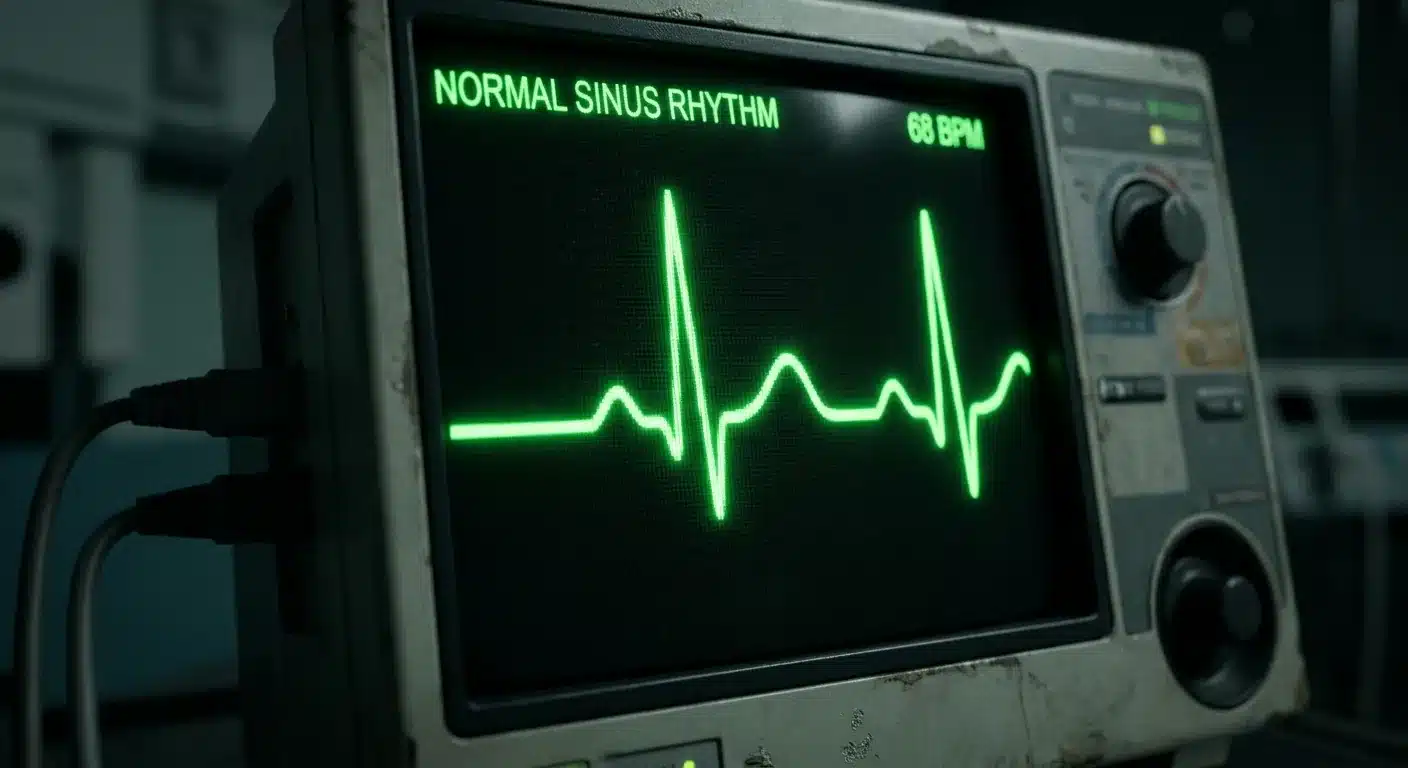
Documented Cardiovascular Effects — Frequency and Context
| Effect | Frequency in Data | Context |
|---|---|---|
| Tachycardia | Most common (~18% in poison control data) | Typically transient; adrenergic mechanism at stimulant-range doses |
| Hypertension | Second most common (~11.7%) | Typically transient; associated with stimulant-range doses |
| QTc prolongation | Reported in high-dose/chronic users | Dose-dependent; appears reversible upon cessation[4] |
| Brugada-pattern ECG | Rare case reports | Extreme chronic use (~84–100 g/day); resolved after cessation[4] |
| Cardiac arrest | Rare case reports | Almost always involves polydrug use or latent cardiac conditions[5] |
| Right ventricular dysfunction | Single case report | Reversed completely after 4 weeks cessation (95 → 26 mmHg)[6] |
| Hypotension | Reported at higher doses | Consistent with opioid-like effects at sedative-range doses[3] |
A 2025 systematic evaluation in Frontiers in Pharmacology (Smallets et al.) analyzed 95 patients across published case reports and concluded that “the literature provides insufficient evidence to support the claim that kratom consumption alone increases the risk of severe acute adverse health effects,” finding confounding substances in 32 of 35 deceased cases — a statistically significant pattern (p = 0.0002).[2]
What does clinical trial data show about kratom and the heart?
The most rigorous cardiovascular data comes from the 2022 clinical pharmacokinetic study by Tanna et al., an FDA-registered clinical trial (NCT04392011) conducted at Washington State University’s Clinical Research Unit. A single 2-gram dose of kratom tea was administered to healthy adults under controlled conditions, with vital signs monitored over 120 hours.[1]
Tanna et al. (2022) Clinical Trial — Key Parameters
| Parameter | Result |
|---|---|
| Study design | Open-label, single-dose, FDA IND #145002 (NCT04392011) |
| Participants | 7 enrolled (3 male, 4 female); 5 completed (ages 26–40) |
| Dose | 2 g kratom powder as tea (~39 mg mitragynine) |
| Monitoring duration | 120 hours (5 days) — blood pressure, pulse, SpO2 |
| Serious cardiovascular events | None reported |
| Mitragynine Cmax | 81.9 nM median; reached at ~1 hour |
| Mitragynine half-life | 45.3 hours (much longer than prior ~24h estimates) |
| CYP inhibition finding | Midazolam exposure increased 40% (CYP3A4 inhibition confirmed in vivo) |
The 45.3-hour half-life finding has important implications for daily users: at typical dosing frequency, mitragynine accumulates to steady-state concentrations substantially higher than single-dose levels — meaning the plasma concentrations seen in this study underestimate what daily users actually experience.[1]
A single-ascending dose pilot study (referenced in Smallets et al., 2025) found no adverse effects up to 12 grams, including at the cardiovascular level.[2] These controlled studies share the same limitations: small sample sizes, healthy participants only, short observation periods. They cannot speak to chronic use or cardiovascular patients. But they consistently show that kratom’s cardiovascular effects at typical doses in healthy adults are minimal.
How does kratom’s pharmacology affect the cardiovascular system?
Understanding why kratom affects the heart requires examining its multi-receptor mechanism. Kratom alkaloids interact with several receptor systems that have direct cardiovascular relevance.
Adrenergic Receptor Activation
Mitragynine binds alpha-1 adrenergic receptors (α-1A, α-1B, α-1D) on blood vessel smooth muscle, mediating vasoconstriction.[3] This explains why kratom at stimulant-range doses can temporarily increase blood pressure and heart rate — the same mechanism as caffeine or other mild sympathomimetics. Stimulation of postsynaptic alpha-2 receptors also contributes to the stimulant effects at low doses.
Opioid Receptor Involvement at Higher Doses
At moderate-to-high doses, opioid receptor (MOR) activation becomes dominant. This shifts kratom’s cardiovascular profile from sympathomimetic to opioid-like: potential hypotension, bradycardia, and at very high doses, respiratory depression — all consistent with µ-opioid receptor activation.[3]
Ion Channel Effects
Research using human induced pluripotent stem cell-derived cardiomyocytes found that mitragynine and its analogues affect cardiac ion channels — specifically, inhibition of neuronal calcium (Ca²⁺) channels.[8] This has implications for cardiac electrical activity and partially explains QTc prolongation observed at very high doses.
The Dose-Response Relationship
Kratom’s cardiovascular effects are dose-dependent and biphasic:[3]
- Low doses (1–5g): Stimulant effects — mild transient increases in heart rate and blood pressure via adrenergic activation
- Moderate-to-high doses (5–15g): Opioid-like effects predominate — potential for hypotension; adrenergic stimulation diminishes
- Very high/chronic doses (>15g): Risk of QTc prolongation and cardiac electrical disturbances increases meaningfully
Does kratom prolong the QT interval?
Yes — dose-dependent QTc prolongation is one of the most consistently documented electrophysiologic effects of kratom, though it is overwhelmingly seen at extreme doses or with co-ingestants rather than at typical consumption. The evidence comes from three converging lines.
In vitro cardiomyocyte data. Using human iPSC-derived cardiomyocytes, mitragynine and several of its alkaloid analogues inhibit cardiac ion channels relevant to the delayed rectifier potassium current (IKr) and calcium handling — the same hERG-channel family implicated in drug-induced QT prolongation generally.[8] The comprehensive 2021 Frontiers in Pharmacology review synthesizing a decade of cardiac pharmacology and case data concluded that QTc prolongation at high doses is consistent with kratom’s multi-channel profile rather than an isolated outlier finding.[9]
Case-level QTc measurements. The Holton (2024) Brugada case documented a QTc of 654 ms at presentation in a 25-year-old consuming an estimated 84–100 g daily — roughly 15–20× typical dosing.[4] A 2025 JACC Case Reports publication on kratom cardiotoxicity documented both reversible Brugada pattern and QTc prolongation in the same patient, with normalization after cessation — strengthening the case that the electrical effects are drug-driven rather than coincidental to underlying cardiac disease.[10]
What this means in practice. Healthy adults taking typical (1–5 g) doses without QT-prolonging medications are extremely unlikely to develop clinically relevant QTc changes. The risk concentrates in three groups: chronic very-high-dose users, users on other QT-prolonging medications (certain antiarrhythmics, antipsychotics, macrolide antibiotics, methadone), and users with congenital long-QT phenotypes whose baseline electrical reserve is narrower. Pre-existing long QT, diagnosed or suspected, should be treated as a meaningful contraindication, not a marginal caution.
What do recent case reports reveal about cardiac risk?
Case reports form the core of kratom cardiovascular concern. Understanding their limitations is essential — they capture adverse events but cannot establish causation, and heavily skew toward severe, polydrug-involved presentations.[2]
Recent Significant Case Reports (2024–2026)
Brugada pattern — Holton et al. (2024), Cureus: A 25-year-old male consuming an estimated 84–100 grams of kratom daily for four years presented with a QTc interval of 654 ms and type 1 Brugada ECG pattern. After cessation, ECG abnormalities progressively resolved.[4] This dose — roughly 15–20× a typical daily serving — represents extreme use far beyond normal consumption patterns.
Ventricular fibrillation — Dodulík et al. (2024), European Heart Journal Case Reports: An adolescent experienced ventricular fibrillation during football training after using kratom combined with caffeine and energy products. Intense physical exertion combined with multiple stimulants is a known trigger for cardiac events, making it difficult to isolate kratom’s contribution.[5]
Right ventricular dysfunction — Alameh et al. (2025), JACC Case Reports: A 24-year-old daily kratom user developed high-output cardiac failure with severe pulmonary hypertension (right ventricular systolic pressure 95 mmHg). After four weeks without kratom, echocardiogram showed complete normalization (pressure 26 mmHg).[6] The complete reversibility within weeks is notable.
Brugada syndrome unmasked — Matthews et al. (2026), JACC Case Reports: Kratom use associated with cardiac arrest in a young man with no known structural heart disease. Authors emphasize kratom’s potential to unmask latent cardiac electrical abnormalities rather than creating structural disease de novo.[7]
Patterns Across Case Reports
Several consistent patterns emerge that help contextualize these cases:
- Extreme doses are consistently involved — far exceeding typical use
- Polydrug use is present in the majority of serious cases (32 of 35 deaths in Smallets analysis)
- Reversibility is common — cardiac abnormalities typically resolve with cessation
- Latent conditions may be unmasked rather than structurally caused
- Young males appear disproportionately represented
Is kratom-associated Brugada syndrome an emerging cardiac signal?
Between 2024 and 2026, multiple peer-reviewed case reports have described Brugada-pattern ECG findings temporally associated with kratom use — a clustering substantial enough that it is no longer reasonable to describe each case as isolated. The pattern is still uncommon relative to the population of kratom users, but it is consistent enough that clinicians and heavy users should understand the signal.
Cases documented to date (in the peer-reviewed literature):
- Holton et al. (2024) — Type 1 Brugada pattern with QTc 654 ms in chronic very-high-dose use, reversible after cessation[4]
- Matthews et al. (2026) — Cardiac arrest in a young man; kratom implicated in unmasking latent electrical abnormality[7]
- Miller et al. (2025) — Reversible Brugada pattern and QTc prolongation normalizing after kratom cessation[10]
- Abubaker et al. (2025) — Chronic kratom use documented as the precipitant for acquired Brugada syndrome[11]
- Al-Harbi & Singh (2026) — Brugada phenocopy induced by kratom overdose[12]
What these cases share. Every documented case to date involves either very high doses, chronic heavy use, or acute overdose — not typical consumption. Several cases showed complete reversibility of the Brugada pattern after cessation. Most involve young adult males, consistent with the epidemiology of native Brugada syndrome. No case has described stable de novo structural cardiac disease caused by kratom; the pattern is consistently one of electrical unmasking or dose-dependent sodium-channel effect.
What it does not yet establish. Case reports cannot estimate incidence. A known population denominator is missing, so there is no defensible statement about absolute risk per million users. But the repeated temporal association between kratom use and Brugada-pattern findings across multiple independent research groups, cardiology journals, and continents is, clinically, the definition of a signal that warrants surveillance. Users with a family history of sudden cardiac death or unexplained syncope should treat kratom differently than the general user — baseline ECG review before use is a reasonable precaution in that subgroup.
Who faces elevated cardiovascular risk from kratom?
Not everyone faces the same cardiovascular risk. Individual health status, concurrent medications, and dose patterns are the primary determinants.
Cardiovascular Risk Factor Matrix
| Risk Factor | Risk Level | Mechanism |
|---|---|---|
| Pre-existing heart disease or arrhythmia | High | Adrenergic stimulation may worsen arrhythmias, hypertension, or heart failure |
| Concurrent stimulant use (caffeine, amphetamines) | High | Additive cardiovascular stress; VF case report involved kratom + caffeine + exercise[5] |
| CYP2D6/CYP3A4 substrate cardiovascular drugs | High | CYP inhibition raises plasma levels of beta-blockers, CCBs, antiarrhythmics to potentially toxic concentrations[1] |
| Latent Brugada syndrome or channelopathy | High | Kratom may unmask pre-existing electrical abnormalities[7] |
| Very high doses (>15g/day chronic) | Moderate–High | Dose-dependent QTc prolongation documented; toxicity correlates with mitragynine serum levels |
| Concurrent CBD use | Moderate | CBD co-administration increases mitragynine exposure ~2.8× via CYP inhibition[1] |
| Concurrent opioids or benzodiazepines | High | Additive CNS/respiratory depression; present in majority of kratom-associated deaths |
| Healthy adults, low-moderate doses, no medications | Low | Clinical trial data (Tanna 2022) shows good tolerability; no cardiovascular events at 2g[1] |
Drug Interactions: The CYP Problem
Kratom’s most clinically significant cardiovascular risk for medicated users is not direct cardiotoxicity — it is the inhibition of CYP3A4 and CYP2D6 enzymes that metabolize a wide range of cardiovascular drugs.[1] Affected drug classes include:
- Beta-blockers: Metoprolol, carvedilol (CYP2D6 substrates) — elevated levels cause excessive bradycardia
- Calcium channel blockers: Diltiazem, verapamil, amlodipine (CYP3A4) — elevated levels cause hypotension and arrhythmia
- Antiarrhythmics: Amiodarone, flecainide (CYP2D6/3A4) — narrow therapeutic index, small elevations cause toxicity
- Statins: Atorvastatin, simvastatin (CYP3A4) — elevated levels increase myopathy and rhabdomyolysis risk
What are the guidelines for heart-conscious kratom users?
If You Have No Known Heart Conditions
- Start with low doses (1–3g) and observe your cardiovascular response before increasing
- Avoid combining kratom with stimulants — including excessive caffeine and energy drinks
- Do not combine kratom with opioids, benzodiazepines, or alcohol — additive CNS and respiratory depression
- Avoid intense exercise immediately after taking kratom, especially with stimulants
- Monitor for symptoms: persistent elevated heart rate, chest pain, or palpitations warrant discontinuation and medical evaluation
- Stay hydrated — dehydration amplifies cardiovascular strain
If You Have Pre-Existing Cardiovascular Conditions
- Consult your cardiologist before use — this is mandatory, not optional
- Kratom’s adrenergic effects may worsen hypertension, arrhythmias, or heart failure
- Disclose kratom use when any cardiovascular medications are being prescribed — CYP interactions can push drugs to toxic levels
- Be aware that kratom is not detected on standard toxicology screens; only explicit disclosure informs your care team
For All Users
- Choose AKA GMP-certified, lab-tested products — contamination and adulteration add unpredictable pharmacological risks
- Understand that long-term cardiovascular safety data does not yet exist — plan accordingly
- Keep kratom use frequency and dose as low as effective — mitragynine’s 45-hour half-life means daily use produces substantial accumulation
FAQ
Does kratom raise blood pressure?
At low-to-moderate doses, kratom can temporarily raise blood pressure through adrenergic receptor (alpha-1) activation on blood vessel walls. This effect is typically mild and transient in healthy individuals. The FDA-registered Tanna et al. (2022) clinical trial at a 2g dose found no clinically significant blood pressure changes during 120 hours of monitoring.[1] People with pre-existing hypertension may be more susceptible and should consult their physician.
Can kratom cause heart attacks?
No clinical trial has documented a heart attack caused by kratom. Published case reports involving cardiac events almost universally involve polydrug use, extremely high doses (often 15–100g/day), or pre-existing latent cardiac conditions. A 2025 Frontiers in Pharmacology review found insufficient evidence that kratom alone causes severe cardiac events.[2] The possibility cannot be entirely excluded given limited research, but the available evidence does not support cardiac arrest as a risk at typical doses in healthy adults.
Is kratom safe if I have heart disease?
If you have heart disease, arrhythmias, or other cardiovascular conditions, kratom carries elevated risk due to adrenergic stimulant effects, potential QTc prolongation at high doses, and CYP-mediated interactions with cardiac medications. Consult your cardiologist before use. Kratom has not been evaluated for safety in cardiovascular patient populations in controlled studies.
What is QTc prolongation and why does it matter?
QTc interval measures how long the heart’s electrical system takes to reset between beats. Prolongation beyond normal (>450 ms in men, >460 ms in women) increases risk of dangerous arrhythmias such as torsades de pointes. Case reports link chronic, high-dose kratom use (70–100g/day) to QTc prolongation — but this appears dose-dependent and reversible upon cessation.[4]
Does kratom interact with heart medications?
Yes, meaningfully. Kratom alkaloids inhibit CYP2D6 and CYP3A4, which metabolize many cardiovascular drugs including metoprolol, carvedilol, diltiazem, verapamil, and antiarrhythmics. This can raise plasma levels of these narrow-therapeutic-index drugs to toxic concentrations.[1] Anyone on cardiovascular medications must discuss kratom use with their prescribing physician.
How much kratom is considered safe for the heart?
No officially established cardiovascular-safe dose exists. Clinical trial data shows 2g was well-tolerated in healthy adults.[1] Cardiac case reports involve doses far exceeding typical use (15–100g/day). The dose-response relationship suggests meaningful cardiac risk begins at chronic very-high doses in susceptible individuals. For most healthy adults at 2–6g, the controlled evidence is reassuring.
Can I exercise while using kratom?
Exercise increases cardiac demands. Combining kratom’s adrenergic effects with intense physical activity adds cardiovascular stress. A 2024 case report documented ventricular fibrillation in an adolescent who combined kratom with caffeine before football training.[5] Avoid intense exercise immediately after kratom use, particularly in combination with other stimulants.
Are kratom’s cardiac effects reversible?
Multiple case reports demonstrate reversibility: QTc prolongation, Brugada-pattern ECG changes, and right ventricular dysfunction all normalized within days to weeks of kratom cessation.[4][6] This pattern suggests functional rather than structural cardiac effects at the doses described — though confirmation across larger populations is needed.
References
- Tanna RS, Nguyen JT, Hadi DL, et al. (2022). Clinical Pharmacokinetic Assessment of Kratom (Mitragyna speciosa), a Botanical Product with Opioid-like Effects, in Healthy Adult Participants. Pharmaceutics, 14(3). [PubMed]
- Smallets S, et al. The acute adverse health effects of kratom: an evaluation of case reports. Front Pharmacol. 2025;16:1620601.
- Prozialeck WC, Jivan JK, Andurkar SV (2012). Pharmacology of kratom: an emerging botanical agent with stimulant, analgesic and opioid-like effects. The Journal of the American Osteopathic Association, 112(12), 792-9. [PubMed]
- Holton K, et al. Acquired Type 1 Brugada Syndrome Induced by Chronic High-Dose Kratom Use. Cureus. 2024;16(11). doi:10.7759/cureus.74262
- Dodulík J, et al. Ventricular fibrillation during football training after kratom and caffeine use in an adolescent. Eur Heart J Case Rep. 2024;8(8):ytae364. doi:10.1093/ehjcr/ytae364
- Alameh I, et al. Kratom-associated acute right ventricular dysfunction. JACC Case Rep. 2025. doi:10.1016/j.jaccas.2025.103278
- Matthews JG, et al. Brugada Syndrome Unmasked by Kratom Use in a Young Man. JACC Case Rep. 2026. doi:10.1016/j.jaccas.2026.103420
- Lu J, Wei H, Wu J, et al. (2014). Evaluation of the cardiotoxicity of mitragynine and its analogues using human induced pluripotent stem cell-derived cardiomyocytes. PloS one, 9(12), e115648. [PubMed]
- Leong Bin Abdullah MFI, Singh D. The adverse cardiovascular effects and cardiotoxicity of kratom (Mitragyna speciosa Korth.): a comprehensive review. Front Pharmacol. 2021;12:726003. PubMed 34646135
- Miller AHF, Krotulski AJ, Walton SE, et al. Kratom cardiotoxicity: reversible Brugada pattern and QTc prolongation. JACC Case Rep. 2025;30(5):103109. PubMed 40054906
- Abubaker M, Adrejiya P, Berhe L, et al. Chronic kratom use as a precipitant for acquired Brugada syndrome. HeartRhythm Case Rep. 2025;11(9):958–961. PubMed 41333925
- Al-Harbi H, Singh SM. Brugada phenocopy induced by kratom overdose. CJC Open. 2026;8(3):325–326. PubMed 41836118

Shop Lab-Tested Kratom
Browse our full selection of AKA GMP-qualified kratom — powder, capsules, extracts, and more. Free shipping on orders $99+.
Shop All Kratom