


Is kratom safe? The honest answer is nuanced — and that nuance is precisely what most coverage gets wrong in both directions. Kratom (Mitragyna speciosa) is neither the deadly poison some regulatory filings have portrayed nor the harmless botanical some vendors imply. What we have is a growing body of peer-reviewed research, a formal WHO review, and clinical pharmacokinetic data from healthy adults. This guide synthesizes that evidence into an honest, dose-anchored safety assessment.[1]
What does the clinical research say about kratom safety?
In 2022, Tanna et al. published the first clinical pharmacokinetic assessment of kratom in healthy human adults — a landmark study measuring absorption, distribution, metabolism, and elimination of mitragynine and related alkaloids after standardized oral dosing.[3] Key findings:
- Mitragynine was well-absorbed orally, reaching measurable plasma concentrations within 1 hour
- Terminal half-life was approximately 23–24 hours, consistent with once or twice daily dosing patterns
- No serious adverse events were reported at the administered doses
- Substantial individual pharmacokinetic variability was observed — reinforcing why standardized dosing recommendations are inherently imprecise
A 2022 survey by Smith et al. examined self-reported dose-effect relationships among 129 regular US kratom users.[4] Most reported effects beginning within 15–30 minutes and dissipating within hours. Over a quarter had increased their dose since initiation; 18.6% had decreased. Greater cessation symptom severity was predicted by more weeks of regular use — a pattern consistent with tolerance and physical dependence development.
The large Grundmann 2017 survey of 8,049 US kratom users found that at moderate doses, most users reported beneficial effects (pain management, mood, energy) with side effects primarily at higher doses — nausea, constipation, dizziness, and sedation being the most common.[2]
How does kratom’s therapeutic index compare to opioids?
A 2013 study by Sabetghadam et al. established the therapeutic index (TI) of mitragynine in mice — the ratio between the lethal dose and the effective dose, where a higher number indicates a wider safety margin:

Therapeutic Index: Kratom Alkaloids vs. Classical Opioids
| Substance | Therapeutic Index (TI) | Primary Risk Factor |
|---|---|---|
| Mitragynine (purified) | ~20:1 | GI distress, nausea at high doses; CYP drug interactions |
| Kratom alkaloid extract | ~3:1 | Sedation, respiratory effects (7-HMG contribution) |
| Morphine | ~70:1 (laboratory); compressed in practice by tolerance and respiratory depression | Respiratory depression, physical dependence |
| Fentanyl | Very narrow (~1.5–3:1 estimated) | Respiratory depression, rapid onset; extremely narrow margin |
Kratom TI data: Sabetghadam et al. 2013. Opioid TI data: standard pharmacology references. TI comparisons across species and methodologies are directional, not precise equivalents.
Important caveats about the therapeutic index data: these figures are from animal models and cannot be directly extrapolated to human safety limits. The purified mitragynine TI of ~20:1 is notably narrower than morphine’s laboratory TI, but the practical comparison is more complex — morphine’s real-world TI is dramatically compressed by tolerance, respiratory depression, and illicit supply contamination. The alkaloid extract TI of 3:1 is also the most clinically relevant number for commercial kratom products, since extract products concentrate multiple alkaloids including the more potent 7-HMG.[1]
What are the dose-dependent side effects?

Kratom’s side effects are dose-dependent — meaning they become more likely and more severe as dose increases. This is a critical point often missing from both pro-kratom and anti-kratom framing.[2]
Kratom Side Effect Risk by Dose Range
| Dose Range | Common Side Effects | Risk Level |
|---|---|---|
| 1–3g (low) | Mild nausea (if empty stomach), mild headache, increased heart rate | Low — side effects uncommon at this range |
| 3–6g (moderate) | Nausea, constipation, dizziness, sedation, cognitive dulling | Moderate — most common range for reported side effects |
| 6–8g (high) | Significant nausea/vomiting, dysphoria, heavy sedation, tremor, blood pressure changes | High — side effects reliably present; risk-benefit shifts unfavorably |
| 8g+ (very high) | Same as above amplified; possible CNS depression; combination toxicity risk elevated | Very high — no pharmacological justification for this range in most users[4] |
The most commonly reported side effects across surveys are nausea, constipation, dizziness, and sedation at higher doses. Heavy metal contamination (lead, arsenic) has been documented in substandard products — not from the kratom plant itself but from soil contamination and poor quality control — which is one reason third-party laboratory testing matters.[1]
For the complete side effects guide including drug interaction risk matrix, see: Kratom Side Effects Guide
What is kratom’s dependence and withdrawal risk?
Regular daily kratom use can produce physical dependence via mu-opioid receptor (MOR) downregulation — the same general mechanism by which classical opioids produce dependence, though typically developing more slowly and producing milder discontinuation symptoms.[5]
Singh et al. (2014) surveyed regular kratom users in Malaysia and documented a withdrawal syndrome upon cessation including: muscle aches, insomnia, irritability, runny nose, and sweating — consistent with mild opioid withdrawal.[5] The Grundmann (2017) survey of US users found that daily users reported more frequent adverse effects and more difficulty with cessation than occasional users, underscoring the dose-frequency dependence of risk.[2]
Key dependence risk factors:
- Daily use — the single most predictive factor for physical dependence development[5]
- High doses — greater MOR activation per session drives faster receptor downregulation
- Duration — more weeks of regular use predicts more severe cessation effects[4]
- Extract products with elevated 7-HMG — the more potent MOR agonist carries higher dependence risk than plain-leaf mitragynine
Mitigation: Using kratom 2–3 days per week maximum, maintaining the lowest effective dose, and taking regular tolerance breaks significantly reduces dependence risk. See: How to Take a Kratom Tolerance Break
What are the drug interaction risks?
Kratom alkaloids — primarily mitragynine — inhibit cytochrome P450 enzymes CYP3A4, CYP2D6, and CYP1A2.[6] This creates clinically meaningful interaction potential with a wide range of prescription medications. CYP inhibition can raise plasma concentrations of co-administered drugs, amplifying both their effects and their toxicity.
Kratom Drug Interaction Risk by Medication Category
| Medication Category | CYP Pathway | Interaction Risk |
|---|---|---|
| Opioid pain medications | CYP2D6, CYP3A4 | High — additive CNS depression; avoid combination |
| Benzodiazepines | CYP3A4 | High — additive sedation; most kratom fatality reports involve this combination |
| SSRIs / SNRIs | CYP2D6, CYP3A4 | Moderate — altered serotonin activity; serotonin syndrome risk if combined with MAOIs |
| Statins | CYP3A4 | Moderate — potential for elevated statin plasma levels; myopathy risk |
| Blood thinners (warfarin) | CYP2C9 | Moderate — INR alteration risk; monitor closely if combining |
| Antiepileptics | CYP2D6, CYP3A4 | Moderate — altered drug levels may affect seizure threshold |
| Alcohol | Multiple | High — additive CNS depression; avoid combination[6] |
Anyone taking prescription medications should disclose kratom use to their prescribing physician before combining it with any medication. The absence of FDA oversight of kratom does not mean the interaction risks are theoretical — they are pharmacologically established via CYP enzyme studies.[6]
Is kratom harmful to the liver?
Kratom-associated liver injury (hepatotoxicity) has been documented in case reports, though it remains rare and typically reversible.[1] Reported cases typically involve cholestatic or mixed hepatocellular-cholestatic patterns — bile flow disruption — rather than direct hepatocellular destruction. Most documented cases resolved upon kratom cessation.
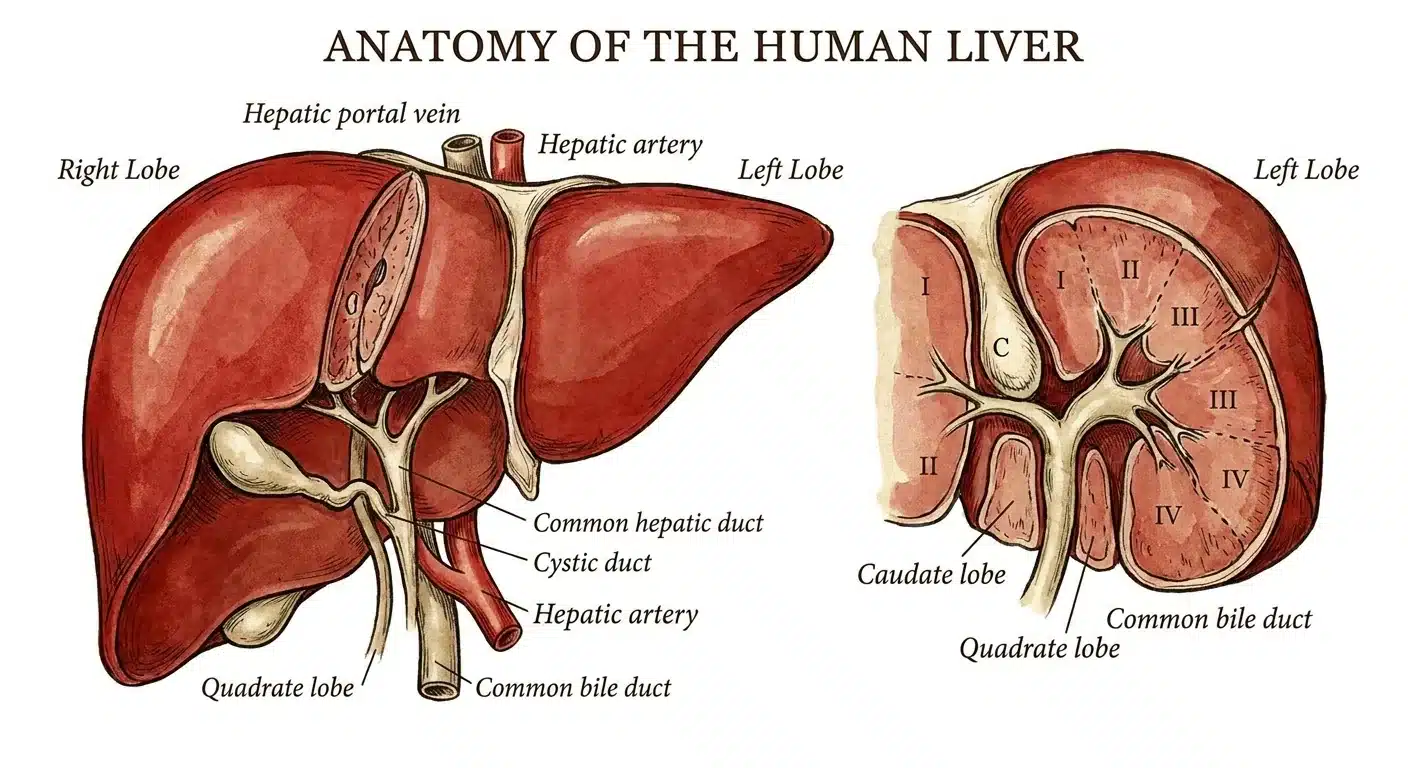
The incidence of clinically significant hepatotoxicity appears low relative to kratom’s estimated 10–16 million US user base. However, several factors increase risk:
- High doses — hepatotoxicity risk scales with dose and frequency
- Daily long-term use — sustained CYP enzyme saturation increases hepatic load
- Heavy metal contamination — documented lead contamination in some commercial products (Prozialeck 2022) may contribute independently to hepatic and renal stress[1]
- Pre-existing liver disease — significantly increases vulnerability
Users with pre-existing liver disease, hepatitis, or who take other hepatotoxic medications should exercise particular caution and consult a physician before using kratom.
What does the death data actually show?
The FDA and CDC have reported kratom-associated deaths, generating significant media coverage. Critical analysis of this data consistently reveals the same pattern: the overwhelming majority of kratom-associated fatalities involve concurrent use of other substances — typically opioids (fentanyl, heroin, oxycodone) and/or benzodiazepines.[1]
Cases in which kratom is the sole substance present in toxicology are extremely rare. The Grundmann 2017 survey of over 8,000 users found no fatalities attributable to kratom alone among the population sampled.[2] The WHO ECDD reviewed the fatality data in 2021 and noted the limitations of attributing causation to kratom in polysubstance cases.
This does not mean kratom carries zero fatality risk — it means the acute lethal risk profile is substantially different from classical opioids, and that combination with other CNS depressants is the primary acute risk factor rather than kratom taken alone at typical doses.
What did the WHO say about kratom?
In October 2021, the WHO’s Expert Committee on Drug Dependence (ECDD) conducted a formal review of kratom at its 44th session. The Committee concluded that there was insufficient evidence to recommend international scheduling of kratom under any UN drug convention.[7]
The Committee’s review noted:
- Kratom is used traditionally in Southeast Asia with a long history of consumption
- Dependence potential exists with heavy use, but is generally milder than classical opioids
- Most adverse effects and fatalities involve polysubstance use
- More research is needed to fully characterize the benefit-risk profile
- The evidence base was insufficient to justify international scheduling at this time
This is the most comprehensive international regulatory review of kratom to date. It does not constitute an endorsement of kratom’s safety — it is a finding that available evidence does not support the scheduling threshold at this time.
How do you reduce the risks of kratom use?
Evidence-based risk reduction for kratom use follows from the established pharmacology:
- Use the lowest effective dose. Side effects, dependence, and drug interaction risk all scale with dose. Find your minimum effective dose and maintain it rather than escalating.[4]
- Avoid daily use. Use kratom 2–3 days per week maximum to prevent mu-opioid receptor downregulation and dependence development.[5]
- Never combine with CNS depressants. Do not use kratom alongside alcohol, benzodiazepines, opioids, or sedatives. This combination accounts for virtually all documented kratom-associated fatalities.[1]
- Disclose to your prescriber. If you take any prescription medications — particularly those metabolized by CYP3A4 or CYP2D6 — tell your physician before using kratom.[6]
- Buy from lab-tested vendors. Choose products with batch-specific Certificates of Analysis showing alkaloid content and passing heavy metals and microbial testing. This eliminates contamination risk from the risk equation.[2]
- Avoid extract products until experienced. High-potency extracts, particularly those with elevated 7-HMG, represent the highest-risk kratom products from both tolerance and dependence standpoints.
- Take regular tolerance breaks. Periodic 1–2 week breaks allow mu-opioid receptor upregulation and prevent tolerance escalation that would require progressively higher doses. See: Kratom Tolerance Break Guide
Frequently asked questions about kratom safety
Is kratom safer than opioids?
The two are pharmacologically distinct, and any “safer than” comparison requires specifying context. Kratom’s primary alkaloids show G-protein-biased agonism at mu-opioid receptors with reduced beta-arrestin-2 recruitment compared to classical opioids like morphine, which is associated with a lower respiratory depression ceiling in preclinical work.[1] Mitragynine’s therapeutic index (~20:1 for the purified alkaloid) is narrower than morphine’s laboratory TI, but published toxicology reports fewer mono-substance kratom fatalities than classical opioid fatalities. Kratom still carries real risk — physical dependence with daily use, CYP drug interactions, and rare hepatotoxicity are documented — and it is not an FDA-approved treatment for pain, opioid use disorder, or any condition.
Can kratom cause liver damage?
Yes, in documented cases — though rare. Case reports have documented kratom-associated cholestatic and mixed hepatitis, typically reversible upon cessation. Risk increases with high doses, long-term daily use, pre-existing liver disease, and potentially with heavy metal-contaminated products. Any user experiencing jaundice, dark urine, or right upper quadrant pain while using kratom should stop immediately and seek medical evaluation.[1]
Can kratom cause a fatal overdose?
Deaths attributed to kratom as the sole substance in toxicology are extremely rare in published case reports. The overwhelming majority of kratom-associated fatalities involve concurrent use of other CNS depressants — most commonly opioids (fentanyl, heroin) and benzodiazepines.[1] Kratom taken alone at typical doses does not appear to produce the same respiratory depression lethality as full opioid agonists, consistent with its partial agonist and biased agonist pharmacology. The principal acute risk is polydrug combination, not kratom in isolation.
Is kratom addictive?
With daily use, yes — kratom can produce physical dependence via mu-opioid receptor downregulation.[5] Discontinuation after heavy daily use produces a withdrawal syndrome typically described as milder than classical opioid withdrawal but similar in character — muscle aches, insomnia, irritability, runny nose. Using kratom on a non-daily schedule and maintaining dose minimums significantly reduces dependence risk. Prior kratom use does not appear to increase morphine self-administration in animal models — a pharmacological distinction from classical opioids that suggests a different reinforcement profile.[1]
Is kratom safe to take with antidepressants?
Not categorically. Many antidepressants are metabolized by CYP2D6 and CYP3A4, which kratom alkaloids inhibit — potentially raising antidepressant plasma levels.[6] Additionally, serotonergic activity at 5-HT₂A receptors has been documented for mitragynine, creating theoretical serotonin syndrome risk when combined with serotonergic antidepressants (SSRIs, SNRIs, MAOIs). Consult your prescribing physician before combining kratom with any antidepressant medication.
Is kratom safe during pregnancy?
No — kratom use during pregnancy is not recommended based on available evidence. Kratom alkaloids cross the placental barrier, and neonatal opioid withdrawal syndrome has been documented in infants born to mothers who used kratom during pregnancy. The risk-benefit calculus strongly favors avoidance during pregnancy. Consult an OB-GYN immediately if you are pregnant and have been using kratom.
What are the signs of kratom overconsumption?
Symptoms of taking too much kratom include: nausea and vomiting, dizziness and loss of coordination, extreme sedation, cognitive impairment, tremor, agitation, rapid or irregular heartbeat, and in severe cases, loss of consciousness. If you or someone else experiences these symptoms after kratom use, especially alongside any other substances, seek immediate medical attention.
Does the WHO consider kratom dangerous?
The WHO Expert Committee on Drug Dependence reviewed kratom in 2021 and concluded that available evidence was insufficient to recommend international scheduling.[7] This is not an endorsement of safety — it is a finding that the evidence does not meet the scheduling threshold based on the comparative harm profile. The Committee noted the need for additional research and acknowledged dependence potential with heavy use.
References
- Prozialeck WC, et al. Pharmacology of kratom: stimulant, analgesic and opioid-like effects. J Am Osteopath Assoc. 2012.
- Grundmann O. Patterns of kratom use and health impact in the US. Drug Alcohol Depend. 2017.
- Tanna RS, et al. Clinical pharmacokinetic assessment of a kratom (Mitragyna speciosa) product. Clin Transl Sci. 2022.
- Smith KE, et al. Self-reported kratom dose-effect relationships among a sample of US adults. Drug Alcohol Depend. 2022.
- Singh D, Müller CP, Vicknasingam BK (2014). Kratom (Mitragyna speciosa) dependence, withdrawal symptoms and craving in regular users. Drug and alcohol dependence, 139, 132-7. [PubMed]
- Hanapi NA, et al. Kratom alkaloids: interactions with enzymes, receptors, and cellular barriers. Front Pharmacol. 2021.
- World Health Organization ECDD. Summary of assessment findings and recommendations. 44th ECDD session, October 2021. WHO, Geneva.
Looking for COA-verified products? Browse our kratom.

Shop Lab-Tested Kratom
Browse our full selection of AKA GMP-qualified kratom — powder, capsules, extracts, and more. Free shipping on orders $99+.
Shop All Kratom