
Kratom tolerance — the gradual reduction in effects over time at the same dose — is one of the most common experiences regular users encounter. The good news: kratom’s pharmacology makes tolerance comparatively mild and highly manageable. This guide explains why tolerance develops, how fast, what the research shows, and the practical strategies long-term users rely on to keep their routine consistent.
What Is Kratom Tolerance?
Tolerance is the body’s adaptation to repeated exposure to an active compound. With kratom, it shows up as a gradual fading of the effects you used to feel at a given dose. The dose that felt balanced a month ago may feel flat today — not because the kratom changed, but because your receptors have adapted to it.
This is not unique to kratom. Caffeine drinkers experience the same phenomenon: the espresso that jolted you awake in week one barely registers by month six. Alcohol, nicotine, and most compounds that act on receptor systems follow a similar pattern. What matters is understanding the mechanism, so you can work with it rather than chase it with higher and higher doses.
The Receptor Biology Behind Tolerance
Kratom’s primary alkaloid, mitragynine, and its more potent metabolite, 7-hydroxymitragynine, interact with mu-opioid receptors (MOR) in the central nervous system, alongside adrenergic and serotonergic activity. With repeated activation, two neuroadaptive processes occur:
- Receptor downregulation — the body reduces the number of receptors on the cell surface. Fewer receptors means the same dose produces a smaller signal.
- Desensitization — the receptors that remain become less responsive to the same amount of agonist. The signal that does get through is weaker.
Both processes are dose-dependent and frequency-dependent. The higher the dose and the more often it is taken, the faster the adaptation. This is well-documented across research on mitragynine’s pharmacology (Suhaimi et al., 2016[4]; Kruegel & Grundmann, 2018[5]).
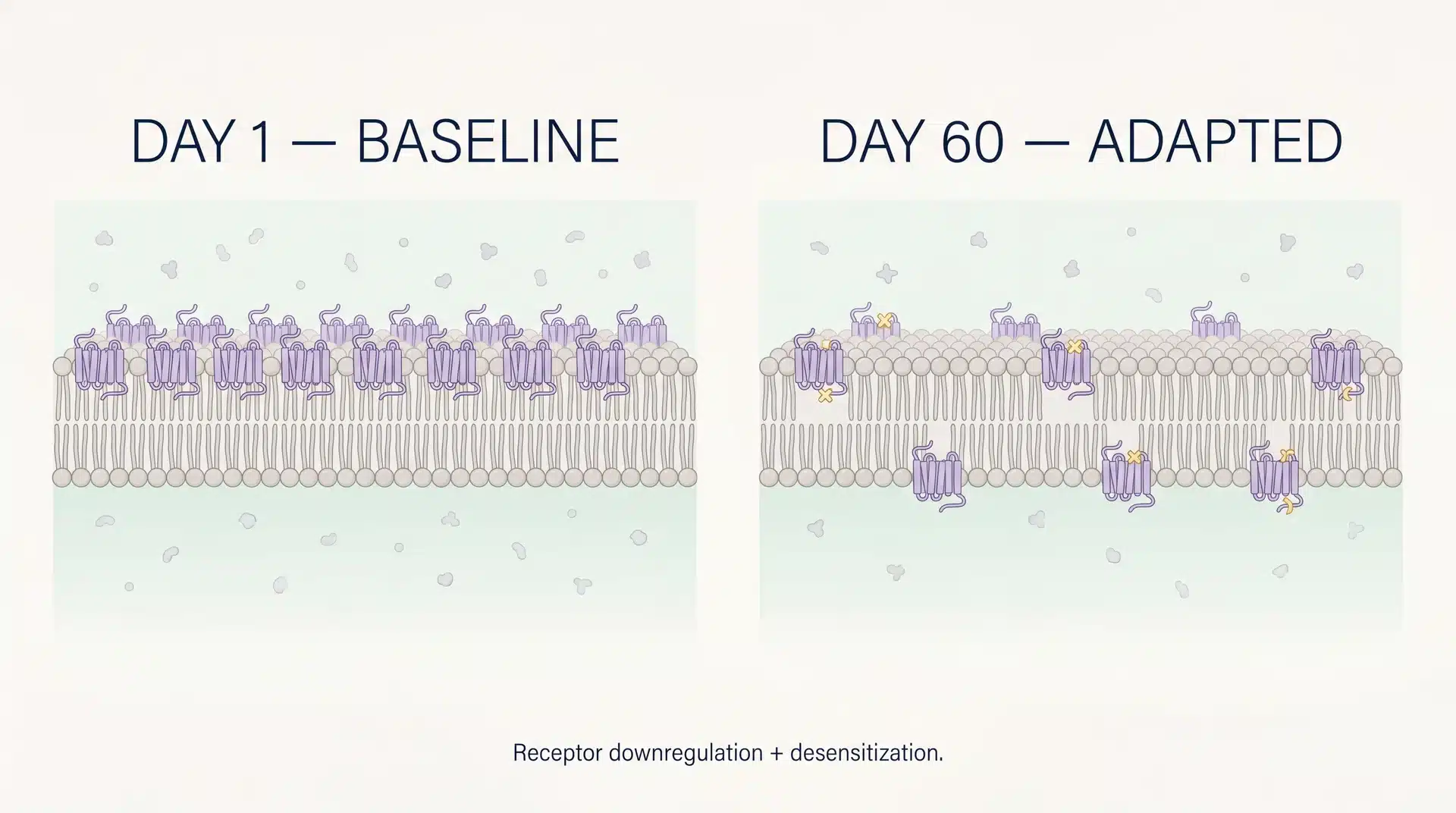
The practical implication is simple: every tolerance-management strategy in this guide works by reducing either the dose, the frequency, or the consistency of the alkaloid profile hitting those receptors.
Why Kratom Tolerance Is Milder Than Opioid Tolerance
Kratom alkaloids are partial agonists at mu-opioid receptors, not full agonists. That distinction matters a great deal pharmacologically. Full agonists (like morphine or oxycodone) maximally activate the receptor every time they bind; partial agonists produce only a fraction of the maximum possible response regardless of dose. This means there is a pharmacological ceiling on both the effect and the receptor adaptation.
A 2013 preclinical study found that mitragynine co-administered with morphine actually prevented the development of morphine tolerance in mice (Fakurazi et al., 2013[1]) — a finding that suggests mitragynine’s activity at MOR behaves differently from classical opioids at the receptor level. A 2020 randomized, placebo-controlled, double-blind study in regular kratom users (Vicknasingam et al., 2020[2]) documented measurable analgesic effects in long-term users, consistent with the broader pattern in which many kratom users report maintaining effects over years at moderate doses.
Survey research reinforces this: Garcia-Romeu et al. (2020)[3], in a survey of nearly 2,800 kratom users, found that a substantial portion reported stable, consistent experiences maintained over years of use, though experiences varied by pattern of use and dose. Swogger et al. (2022)[8] arrived at similar observations in their clinical review.
| Property | Kratom (partial agonist) | Classical opioids (full agonist) |
|---|---|---|
| Max receptor activation | Fractional — natural ceiling | Maximal — no intrinsic ceiling |
| Tolerance escalation | Gradual; often plateaus with rotation | Rapid and typically open-ended |
| Typical management tool | Strain rotation + 1–2 week breaks | Medical supervision required |
| Dose-creep risk | Moderate at daily high-dose use | High at any sustained use |
| Research evidence | Fakurazi 2013[1]; Kruegel & Grundmann 2018[5] | Standard pharmacology literature |
None of this means kratom tolerance doesn’t exist — it clearly does. It means that, with reasonable practices, most users can avoid the runaway escalation that characterizes traditional opioids.
How Fast Does Tolerance Develop?
Timelines vary dramatically between individuals because of differences in metabolism (particularly CYP enzyme activity), dose size, frequency, and which strains are used. McCurdy et al. (2024)[11], in their clinical pharmacology review, noted that interindividual variability in mitragynine metabolism is significant and is part of why dose-response relationships differ so much from person to person.
Rough patterns reported in user surveys and the clinical literature:
- Occasional users (once or twice per week, low-to-moderate dose): often report little noticeable tolerance over months or even years.
- Moderate users (three to five times per week): may notice some tolerance within 2–4 weeks, typically manageable with rotation.
- Daily users: typically notice tolerance within 2–6 weeks, depending on dose. Tolerance management becomes more important here.
- Multiple-times-daily users at higher doses: tolerance develops fastest and is most likely to lead to dose creep if not actively managed.
These are patterns, not rules. Two users on identical routines can have different experiences.
Signs You’ve Developed Tolerance
- Your usual dose no longer produces the effects it once did.
- You find yourself gradually increasing your dose to reach the same result.
- Effects feel flat, muted, or “thin” compared to when you started.
- Switching to a different strain temporarily restores the effects you used to get.
- You feel the need to re-dose sooner after your first serving.
- The duration of effects has shortened.
Tracking your doses is the single best early-warning system. Tolerance develops slowly enough that incremental increases are easy to miss — a logbook or a simple note in your phone makes it visible before it becomes a problem.
Does Strain Rotation Actually Work?
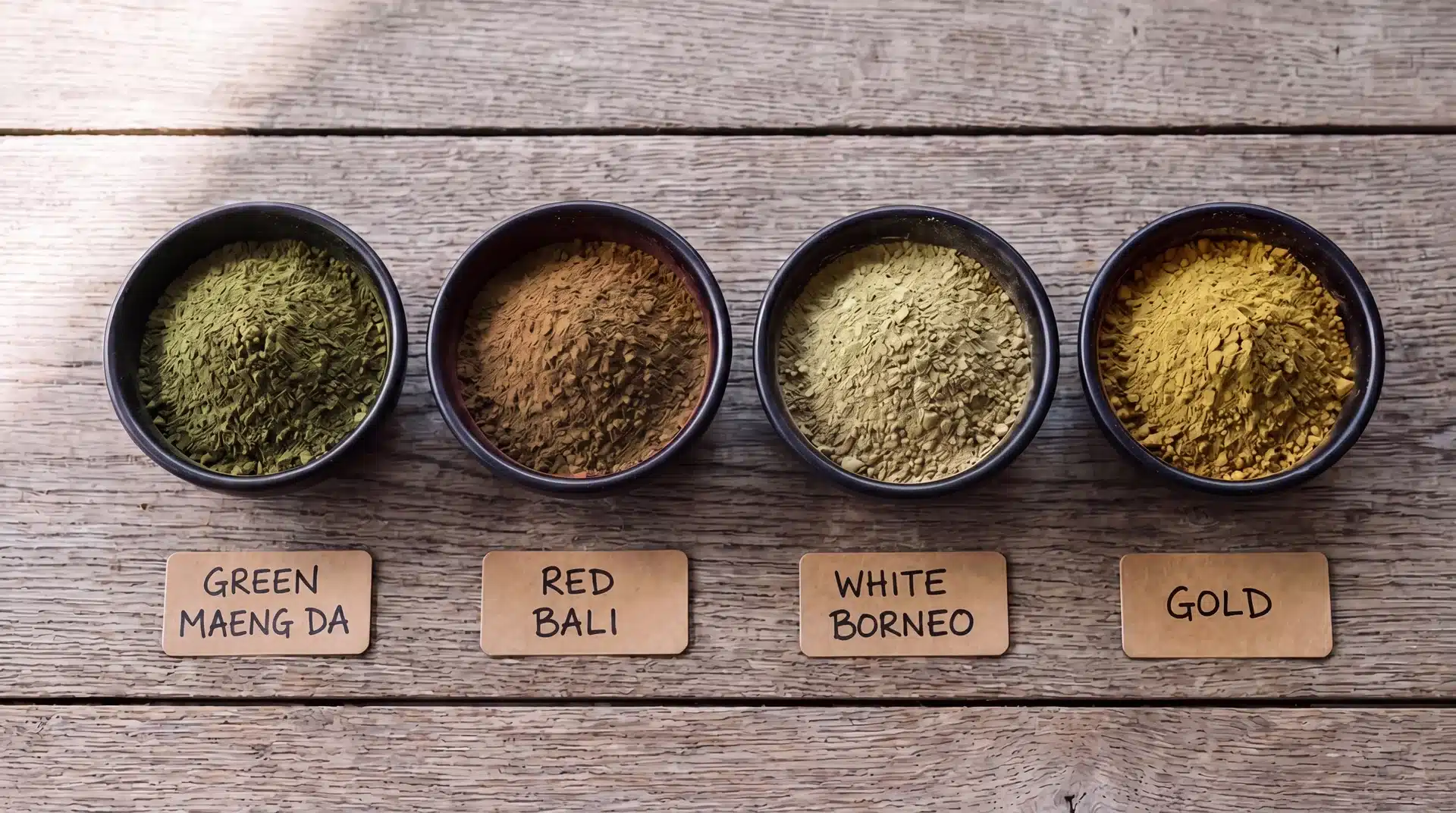
Yes — and the reason is chemistry, not marketing. Different kratom strains contain different ratios of mitragynine, 7-hydroxymitragynine, paynantheine, speciogynine, and dozens of other alkaloids. Because each strain presents a slightly different profile to your receptors, rotating between them prevents your receptors from adapting to any single chemical signature.
Across the batches we test at Amazing Botanicals, our third-party Certificates of Analysis routinely show meaningful variation in alkaloid concentration from strain to strain and even between batches of the same strain. This real-world variation is what makes rotation work — you’re genuinely presenting different inputs to your receptors, not just relabeled product. In ten years of running this business, the customers who maintain the most consistent long-term experience are almost always the ones rotating four or more strains rather than sticking with a single favorite.
Basic rotation principles:
- Use a different strain each day whenever possible.
- Rotate across vein colors (white, green, red) rather than staying within one color family.
- Maintain a minimum 3–4 strain rotation. More is better.
- Include strains from different geographic origins (Bali, Borneo, Malay, Maeng Da).
| Day | Strain | Vein Color | Origin | Notes |
|---|---|---|---|---|
| Monday | White Maeng Da | White | Thailand | Start of week — higher mitragynine |
| Tuesday | Red Bali | Red | Bali / Indonesia | Different alkaloid ratio — rotates receptors |
| Wednesday | Off day | — | — | Partial receptor recovery |
| Thursday | Green Malay | Green | Malaysia | Balanced alkaloid profile |
| Friday | White Borneo | White | Borneo | Different white from Monday — distinct profile |
| Saturday | Gold | Gold | Various | Unique secondary alkaloid mix |
| Sunday | Off day | — | — | Full rest — reset before next cycle |
Rotation also works as a self-diagnostic. If a fresh strain delivers noticeably stronger effects than your usual, that gap is a measure of the tolerance you’d built to the original.
Which Dosing Practices Prevent Tolerance?
Six practices do most of the work. In a decade of watching what separates customers who stay on stable routines from those who chase escalating doses, this is the shortlist.
- Use the lowest effective dose. More is not better — it is faster tolerance.
- Space use to 3–4 days per week when possible. Non-use days allow partial receptor recovery.
- Avoid same-day redosing unless necessary. Each re-dose accelerates adaptation.
- Take your dose on an empty or light stomach for consistent absorption (Tanna et al., 2022[9]).
- Weigh your kratom, don’t eyeball it. A kitchen scale is the cheapest tolerance-management tool you can buy.
- Track your doses. Creeping dose increases are the slow leak most people don’t notice until they’re already at 2x their original.
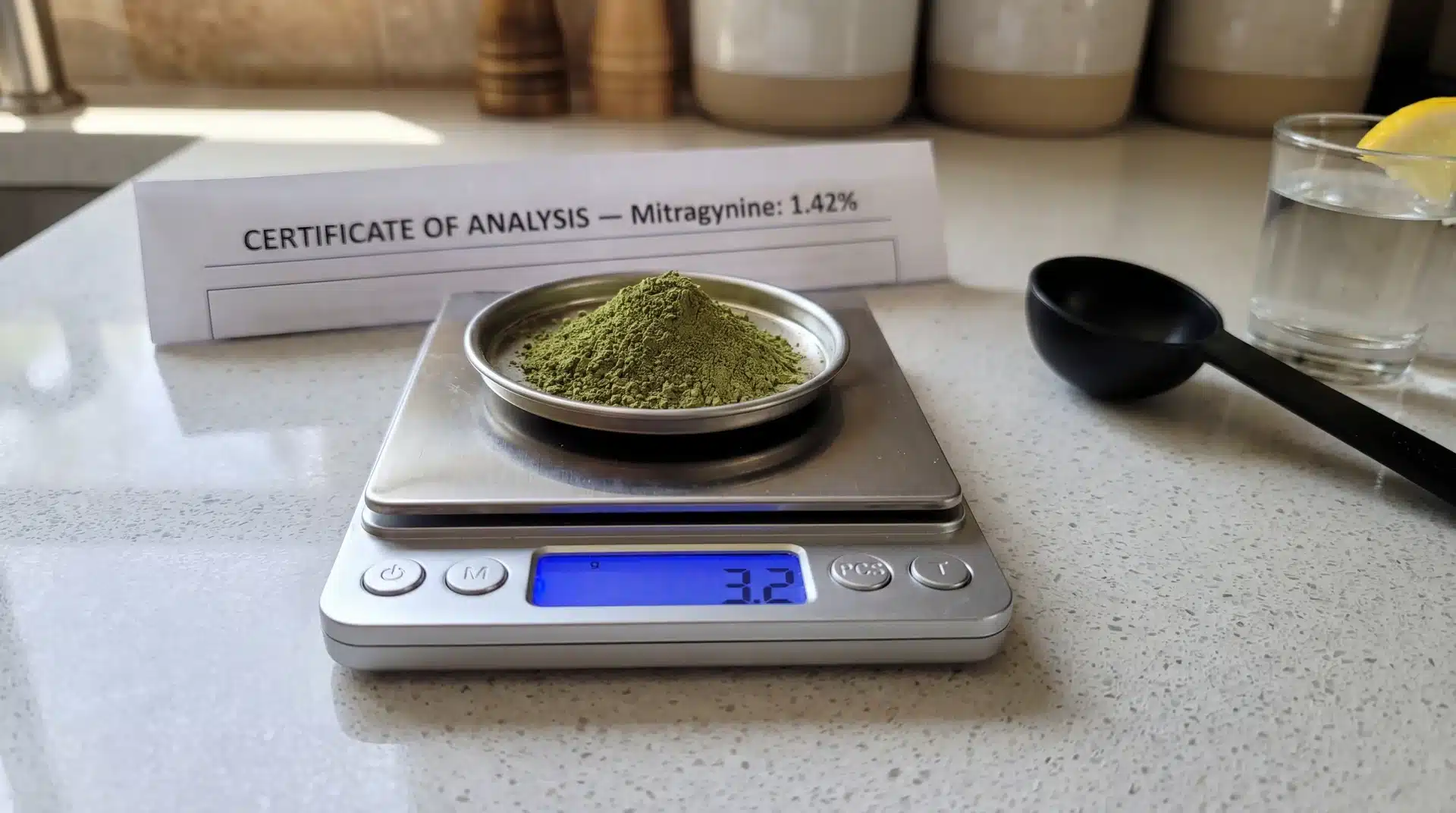
For general dose ranges, see our kratom dosage guide. Smith et al. (2022)[7] found in their dose-effect survey that most users report consistent effects within a narrow personal range — the goal is to find and stay in that range, not to escalate out of it.
How Long Should a Kratom Tolerance Break Be?
Short, standard, or full reset — the right length depends on how heavy your use has been. When rotation and spaced dosing aren’t enough, a scheduled break is the most reliable way to restore sensitivity.
- Short break (2–4 days): Allows partial receptor recovery. Useful for mild tolerance or as a regular weekly reset.
- Standard break (1–2 weeks): Meaningfully restores sensitivity for most users. A common rhythm is a 2-week break every 2–3 months.
- Full reset (30+ days): Produces a near-complete tolerance reset for heavy daily users. Many long-term users do one of these per year.
Singh et al. (2014)[6], in a study of regular kratom users, documented that cessation can produce mild discomfort in frequent high-dose users, though most users report manageable experiences. If you’ve been using daily at higher doses for a long time, plan your break at a time when you have low obligations — the first few days may include reduced sleep quality or restlessness that resolves on its own.
For a deeper look at break strategy and planning, see our kratom tolerance breaks guide.
What About “Potentiators”?
The kratom community has a long-running discussion about “potentiators” — substances that users report may enhance or extend kratom’s effects. The most commonly mentioned are citrus juice (lemon or grapefruit), magnesium supplements, and turmeric.
The research is limited, and most claims are user-reported rather than clinically studied for kratom specifically. Citrus juice does facilitate alkaloid extraction in tea preparations (Hanapi et al., 2021[10]). Magnesium’s role is hypothesized to relate to NMDA receptor activity, which has been shown in broader pharmacological research to affect opioid tolerance, but this has not been specifically validated for kratom.
A few honest caveats:
- Potentiators do not eliminate tolerance — they may shift when and how it develops, not whether it develops.
- Grapefruit juice inhibits CYP3A4, the enzyme partially responsible for mitragynine metabolism. This can meaningfully change blood levels and is not recommended without caution.
- Always consult a healthcare provider before combining kratom with any supplement, especially if you take other medications.
The single most effective “potentiator” is a tolerance break. Nothing you can buy produces the same restoration of sensitivity as two weeks off.
When Should You Take a Break vs. Push Through?
If you find yourself:
- Doubling the dose you used three months ago to get similar effects,
- Thinking about kratom more than using it,
- Using kratom through a tolerance plateau where it barely works anymore,
…a break will serve you far better than more kratom. Pushing through an already-tolerant state tends to waste product and accelerate further adaptation without delivering the experience you’re looking for.
Conversely, if your dose has been stable for months and your effects feel consistent, there’s nothing to fix. Tolerance management is about preventing drift, not eliminating every adaptation.
Frequently Asked Questions
How long does it take for kratom tolerance to reset?
For most users, a 1–2 week break restores a meaningful amount of sensitivity. A 30-day break produces a near-complete reset for heavy daily users. Very occasional users may not need to reset at all if they rotate strains.
Does kratom tolerance cross over between strains?
Partially, yes. Because all kratom strains contain mitragynine and 7-hydroxymitragynine as the primary active alkaloids, there is a shared “core” tolerance. But each strain has a unique ratio of secondary alkaloids, which is why switching strains can temporarily restore some effects — and why rotation works.
Is kratom tolerance the same as dependence?
No. Tolerance is your receptors adapting to the compound; dependence is your body relying on the compound to feel normal. Tolerance can exist without dependence, though extended high-dose daily use can contribute to both. Moderate, rotated use rarely produces meaningful dependence (Singh et al., 2014[6]; Swogger et al., 2022[8]).
Will I get withdrawal symptoms from a tolerance break?
For occasional and moderate users: usually not. For heavy daily users: mild symptoms like reduced sleep quality, restlessness, or irritability for a few days are possible. These typically resolve on their own. For severe or prolonged symptoms, consult a healthcare professional.
Can I avoid tolerance entirely?
Not completely — your receptors will always adapt somewhat to repeated exposure. But with rotation, lowest-effective-dose discipline, and occasional breaks, most users can keep tolerance mild enough that it never interferes with their routine.
Does higher-quality kratom develop tolerance slower?
Tolerance depends on dose and frequency, not purity. Higher-quality kratom means more consistent alkaloid content and better predictability, but it doesn’t bypass receptor adaptation. Lab-tested products (all Amazing Botanicals kratom comes with third-party COAs) do help with accurate dosing, which indirectly helps tolerance management.
If tolerance keeps escalating despite rotation, what should I do?
Take a full break of at least 2 weeks, ideally longer. If you find it difficult to take a break, that is a signal to talk to a healthcare provider. Tolerance that can’t be managed with rotation, dose discipline, and periodic breaks is a sign the pattern of use itself needs attention.
How does kratom tolerance compare to caffeine tolerance?
The analogy is closer than most people expect. Both caffeine and kratom alkaloids produce tolerance through receptor adaptation — caffeine via adenosine receptors, mitragynine primarily via mu-opioid receptors. In both cases, daily use at consistent doses leads to a gradual fading of effects over weeks. The key difference is ceiling: caffeine’s receptor system allows faster and more pronounced tolerance, which is why many coffee drinkers escalate from one cup to three without noticing. Kratom’s partial agonist profile at the opioid receptor creates a lower ceiling on both effect and adaptation. The management strategies also parallel each other — caffeine users who cycle days off or rotate between caffeinated and decaf drinks maintain more sensitivity over time. The same logic applies to kratom: rotation and scheduled breaks preserve responsiveness better than daily same-dose, same-strain use.
Can I use kratom every day without developing tolerance?
Daily use makes tolerance more likely, but it doesn’t make it inevitable — and it doesn’t make it unmanageable. The two variables that matter more than frequency alone are dose size and alkaloid consistency. A daily user who rotates strains aggressively, stays at the lowest effective dose, and takes a short break every 4–6 weeks can often maintain stable effects for extended periods. A daily user who takes the same strain at an escalating dose with no breaks will develop significant tolerance within weeks. Survey data consistently shows that the range of experiences among daily kratom users is wide — some report years of stable use at consistent doses, while others describe rapid tolerance escalation. The difference is almost always rotation and dose discipline, not frequency by itself. If daily use is your routine, applying the strategies in this guide is especially important.
How do I know when my tolerance break has worked?
The clearest signal is returning to your previous dose and noticing the effects feel noticeably stronger than they did before the break — closer to how they felt when you first started using that strain. Some users describe it as effects feeling “fresh” again. Practically, a successful reset usually means your original effective dose (the one that worked before tolerance set in) is again producing the same result with the same duration. It does not mean you should immediately return to daily high-dose use. The break is an opportunity to restart at a lower dose and build a new, more conservative baseline. If you return at your pre-break dose and feel nothing changed, the break was likely too short — or your daily dose before the break was high enough that full receptor recovery needs more than the break length you used. Extend by another week and retest.
Does tolerance develop differently with kratom extracts vs. powder?
Yes — and it’s an important distinction for regular users. Kratom extracts (including enhanced powders, liquid shots, and resin-based products) deliver significantly higher concentrations of mitragynine and 7-hydroxymitragynine per gram than plain-leaf powder. Higher alkaloid exposure per dose means faster receptor adaptation and more pronounced tolerance development. Users who rotate freely between extract products and powder often report that extract use noticeably dulls their sensitivity to plain-leaf powder. For tolerance management, the practical guidance is to treat extracts as an occasional supplement rather than a daily driver — use them situationally and return to rotated plain-leaf powder as the baseline. If you use extracts regularly, applying a more aggressive rotation and break schedule is especially important. See our kratom extracts page for product options, and our dosage guide for serving-size reference across formats.
References
- Fakurazi, S., Rahman, S.A., Hidayat, M.T., et al. (2013). The combination of mitragynine and morphine prevents the development of morphine tolerance in mice. Molecules, 18(1), 666–681. [PubMed]
- Vicknasingam, B., Chooi, W.T., Rahim, A.A., et al. (2020). Kratom and pain tolerance: A randomized, placebo-controlled, double-blind study. Yale Journal of Biology and Medicine, 93(2), 229–238. [PubMed]
- Garcia-Romeu, A., Cox, D.J., Smith, K.E., et al. (2020). Kratom (Mitragyna speciosa): User demographics, use patterns, and implications for the opioid epidemic. Drug and Alcohol Dependence, 208, 107849. [PubMed]
- Suhaimi, F.W., Yusoff, N.H., Hassan, R., et al. (2016). Neurobiology of kratom and its main alkaloid mitragynine. Brain Research Bulletin, 126(Pt 1), 29–40. [PubMed]
- Kruegel, A.C. & Grundmann, O. (2018). The medicinal chemistry and neuropharmacology of kratom: A preliminary discussion of a promising medicinal plant and analysis of its potential for abuse. Neuropharmacology, 134(Pt A), 108–120. [PubMed]
- Singh, D., Müller, C.P., & Vicknasingam, B.K. (2014). Kratom (Mitragyna speciosa) dependence, withdrawal symptoms and craving in regular users. Drug and Alcohol Dependence, 139, 132–137. [PubMed]
- Smith, K.E., Rogers, J.M., Dunn, K.E., et al. (2022). Searching for a signal: Self-reported kratom dose-effect relationships among a sample of U.S. adults with regular kratom use histories. Frontiers in Pharmacology, 13, 765917. [PubMed]
- Swogger, M.T., Smith, K.E., Garcia-Romeu, A., et al. (2022). Understanding kratom use: A guide for healthcare providers. Frontiers in Pharmacology, 13, 801855. [PubMed]
- Tanna, R.S., Nguyen, J.T., Hadi, D.L., et al. (2022). Clinical pharmacokinetic assessment of kratom (Mitragyna speciosa), a botanical product with opioid-like effects, in healthy adult participants. Pharmaceutics, 14(3), 620. [PubMed]
- Hanapi, N.A., Chear, N.J.Y., Azizi, J., & Yusof, S.R. (2021). Kratom alkaloids: Interactions with enzymes, receptors, and cellular barriers. Frontiers in Pharmacology, 12, 751656. [PubMed]
- McCurdy, C.R., Sharma, A., Smith, K.E., et al. (2024). An update on the clinical pharmacology of kratom: Uses, abuse potential, and future considerations. Expert Review of Clinical Pharmacology, 17(2), 131–142. [PubMed]
Disclaimer: This article is for educational purposes only and is not wellness advice. Kratom is not FDA-approved to diagnose, manage, resolve, or prevent any condition. Consult a qualified healthcare provider before starting, changing, or stopping any supplement regimen.

Shop Lab-Tested Kratom
Browse our full selection of AKA GMP-qualified kratom — powder, capsules, extracts, and more. Free shipping on orders $99+.
Shop All Kratom