


7-hydroxymitragynine (7-OH, also written 7-HMG) is a minor compound detected at trace or undetectable levels in dried kratom leaf — formed largely through oxidation of mitragynine after harvest rather than as a primary plant biosynthesis product — yet it is among the most pharmacologically potent compounds associated with the plant in laboratory assays. The often-cited 46× figure derives from in vitro intestinal-tissue assays, with in vivo potency multipliers being substantially smaller. Research published in 2019 established that the body produces 7-OH by metabolizing mitragynine, meaning 7-OH is an active metabolite of the most abundant kratom alkaloid. Isolated and concentrated 7-OH products are chemically and pharmacologically distinct from whole-leaf kratom powder.
What Is 7-Hydroxymitragynine?
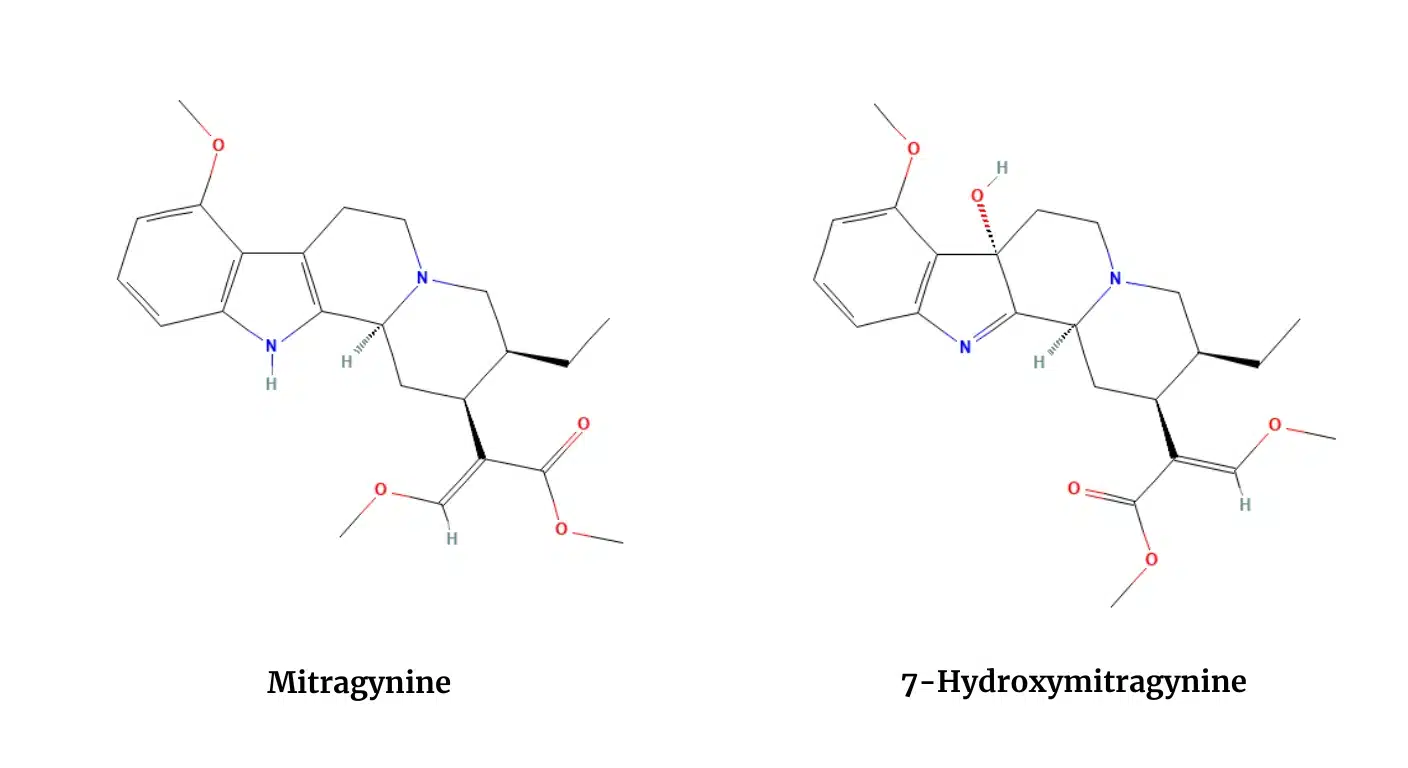
7-hydroxymitragynine is an indole alkaloid found in Mitragyna speciosa, the kratom plant. It was first isolated and characterized in the 1990s by Japanese researchers at Chiba University studying the phytochemistry of Mitragyna species. Structurally, it is a hydroxylated derivative of mitragynine — the same molecular scaffold with an additional hydroxyl group at position 7 of the indole ring system.
The hydroxylation at that position changes the pharmacological profile substantially. Where mitragynine is described by researchers as an atypical opioid — exhibiting partial agonism at µ- and δ-opioid receptors with limited β-arrestin-2 recruitment, a signaling distinction associated with reduced respiratory depression risk relative to classical opioids — 7-OH shows much stronger µ-opioid receptor (MOR) binding affinity and intrinsic activity. Matsumoto et al. (2004) established that 7-OH produced potent antinociceptive effects in mice in both tail-flick and hot-plate tests, with effects blocked by naloxone — confirming opioid-receptor involvement. Follow-up experiments using selective antagonists, together with receptor-binding assays, identified the MOR as the primary site of action. [1]
Because it binds more tightly to opioid receptors than mitragynine, 7-OH draws significant attention in both pharmacological research and regulatory discussions. Understanding what it is — and what it isn’t — is essential for anyone making informed decisions about kratom products.
How Much 7-OH Is Actually in Kratom Leaf?
This is the most practically important question, and the answer surprises most consumers: in well-handled, properly dried whole kratom leaf and powder, 7-OH is typically not detectable by standard HPLC or UPLC testing — or present at trace levels below 0.05% w/w.
The 2009 simultaneous analysis by Kikura-Hanajiri et al. using HPLC or UPLC-MS on multiple kratom samples found that while mitragynine was consistently the most abundant alkaloid at 1.2–2.4% in whole-leaf samples (with concentrated resin samples having higher amounts), 7-OH was present at only trace concentrations in dried material, often near or below the analytical detection limits of the 2009 method. [6] The detection limit will vary based on the specific quantitative method being used and results should be reported as Not Detected (ND) and detail that there was no amount of that compound found greater the Limit of Quantification (LOQ).
At Amazing Botanicals, our HPLC/UPLC COA panels test for both mitragynine and 7-OH. Across our current inventory, mitragynine reads between 1.1–1.8% depending on the product. 7-OH in our powders consistently reads ND (not detected) or below 0.1 mg/g — well under the ~0.05% w/w upper bound observed across the kratom market. This is the expected profile for authentic, unaltered kratom leaf powder.
| Alkaloid | Typical % Dry Weight | Typical mg/g | Primary Receptor Target(s) |
|---|---|---|---|
| Mitragynine | 1.0–3.0% | 10–30 mg/g | MOR partial agonist, adrenergic, serotonergic |
| 7-Hydroxymitragynine | <0.05% (often ND) | <0.5 mg/g (often ND) | MOR partial agonist (higher efficacy than mitragynine) |
| Speciociliatine | ~0.4–0.8% | 4–8 mg/g | MOR partial agonist |
| Paynantheine | ~0.2–0.6% | 2–6 mg/g | 5-HT₁A and 5-HT₂B serotonin receptors (high binding affinity); weak antagonist at µ-/κ-opioid receptors. Antinociception via serotonergic mechanism, not opioid. |
| Corynantheidine | <0.1% | <1 mg/g | MOR partial antagonist |
| Speciogynine | ~0.2–0.5% | 2–5 mg/g | 5-HT₁A and 5-HT₂B serotonin receptors (high binding affinity); opioid-receptor-independent antinociception via serotonergic mechanism |
The practical takeaway: a 2g serving of quality kratom powder contains roughly 24–30 mg of mitragynine and <0.2 mg of 7-OH — often zero. That ratio, and the total alkaloid content, defines the whole-plant pharmacology of kratom.
Is 7-OH Actually a Natural Plant Alkaloid?
This question matters more than it sounds. The 7-OH product industry argues that because trace 7-OH can be detected in dried kratom leaf, isolated 7-OH products are simply a “kratom-derived alkaloid” — and therefore equivalent, botanically and legally, to kratom itself. The chemistry tells a more complicated story.
Mitragynine, kratom’s most abundant alkaloid, is air-sensitive: oxidation at the C7 position converts mitragynine into 7-OH. This reaction proceeds slowly during drying, storage, light exposure, and time on a shelf — which is one reason 7-OH is essentially undetectable in fresh leaf material but accumulates at trace levels in dried, aged powder. The dominant pathway from mitragynine to 7-OH is not biosynthesis inside the living plant; it is post-harvest oxidation after the leaf has been picked and processed.
The second route to 7-OH is the in vivo one described in detail below: enzymatic oxidation of mitragynine after ingestion. [2][5] The third route, used by commercial 7-OH product manufacturers, is deliberate chemical oxidation of mitragynine starting material on an industrial scale. All three pathways produce the same molecule, but the resulting concentrations are not equivalent. Post-harvest oxidation in dried leaf keeps 7-OH at trace levels (typically <0.05% by dry weight in commercial whole-leaf products). In vivo CYP3A metabolism produces 7-OH at plasma concentrations that reach roughly 15–25% of mitragynine after repeated dosing — a meaningful but bounded exposure. Industrial chemical oxidation, by contrast, produces concentrated 7-OH product material at 70%+ purity — more than three orders of magnitude above natural leaf concentrations. None of these pathways involves the plant biosynthesizing 7-OH directly; even the post-harvest route is artifact formation from mitragynine after the leaf is picked.
The practical implication: arguments that frame isolated 7-OH as “naturally occurring” because trace amounts appear in dried leaf misread the chemistry and mislead consumers. The trace amounts appear because mitragynine is liable to oxidation, not because the kratom plant is making meaningful amounts of 7-OH. The compound a consumer ingests when they consume isolated 7-OH is a chemically converted product — even when the starting material was a kratom alkaloid.
How Does 7-OH Compare to Mitragynine in Potency?
In follow-up work, Matsumoto et al. (2006) calculated potency ratios from subcutaneous dosing in mice: 7-OH was approximately 5.7-fold more potent than morphine in the tail-flick test (spinal antinociception) and 4.4-fold more potent in the hot-plate test (supraspinal antinociception). [15] The often-cited 13× morphine and 46× mitragynine figures derive from in vitro guinea pig ileum twitch-contraction assays from the same research group across three studies (Takayama 2002 [14]; Matsumoto 2004 [1]; Horie 2005 [16]), which reported 7-OH inhibiting electrically induced contractions roughly 11–17× more potently than morphine and 29–46× more potently than mitragynine. These in vitro multipliers reflect a different endpoint (smooth muscle twitch suppression) than in vivo analgesia and do not directly predict clinical pharmacology in humans.
This does not mean 7-OH is “13 times more dangerous than morphine” in a clinical sense — potency in rodent models does not translate linearly to human pharmacology, toxicology, or abuse potential. But it establishes that 7-OH is not a benign trace alkaloid: at elevated concentrations it commands serious pharmacological consideration.
| Endpoint / Assay | Route | 7-OH vs Morphine | 7-OH vs Mitragynine | Citation |
|---|---|---|---|---|
| Twitch suppression (GP ileum, in vitro) | n/a | 11–17× (range across 3 studies) | 29–46× (range across 3 studies) | Takayama 2002 [14]; Matsumoto 2004 [1]; Horie 2005 [16] |
| Tail-flick antinociception (mice) | s.c. | 5.7× | — | Matsumoto 2006 [15] |
| Hot-plate antinociception (mice) | s.c. | 4.4× | — | Matsumoto 2006 [15] |
| Hot-plate antinociception (mice) | oral | “more potent” (no calculated ratio vs morphine) | ~3.3× | Matsumoto 2004 [1]; Berthold 2022 [12] |
| Respiratory depression (mice) | oral | ~2× | ~2.9× | Hill 2022 [17] |
In the context of whole-leaf kratom, the near-absence of 7-OH means its higher potency is only relevant as a biotransformation product of mitragynine. This changes completely when 7-OH is isolated or chemically concentrated and consumed.
Does Mitragynine Convert to 7-OH in the Body?
Yes — and this finding, published in 2019 in ACS Central Science by Kruegel et al., fundamentally reframed the understanding of kratom’s pharmacology. [2] The study demonstrated that mitragynine undergoes metabolic oxidation in the liver, mediated by cytochrome P450 (CYP) 3A isoforms, to produce 7-hydroxymitragynine as an active metabolite.
This means when you consume whole-leaf kratom powder, the body generates some 7-OH as part of mitragynine metabolism. The Kruegel 2019 study used mouse and human liver preparations in vitro plus in vivo work in mice to show this conversion occurs in mammalian systems and is pharmacologically relevant. The authors went further: based on measured brain concentrations of 7-OH following mitragynine administration, they argued that most or all of the opioid-receptor-mediated analgesic activity attributed to mitragynine could in fact be explained by the 7-OH produced as a metabolite. [2]
Kamble et al. (2019) further characterized the metabolic pathways, identifying specific CYP450 enzymes responsible. [5] It was found that CYP3A4 is the primary enzyme responsible for metabolism of mitragynine with contributions from CYP2D6 and CYP2C9. Subsequent work by Tanna et al. (2021) further characterized the inhibition potential of mitragynine and 7-OH across common CYP and UGT enzymes. [19] The key implication: 7-OH is not just a trace contaminant in kratom — it is also part of the pharmacological action after consumption of kratom. However, the systemic 7-OH exposure produced through metabolism of oral mitragynine appears substantially lower than what isolated 7-OH products deliver. In Berthold et al. (2022), oral mitragynine dosing in mice produced 7-OH plasma exposure (AUC) approximately six-fold lower than direct oral 7-OH administration at comparable doses. [12] Importantly, this is not an apples-to-apples comparison — taking 30 mg of mitragynine does not produce the equivalent exposure of taking 6 mg of isolated 7-OH, even when metabolite ratios reach 15–25%. Human bioavailability of isolated 7-OH has not been characterized in controlled studies, but the in vivo metabolic pathway does not produce receptor-level concentrations comparable to direct ingestion of 7-OH isolates.
In humans, co-administration of a CYP3A4 inhibitor (itraconazole, 200 mg/day for 4 days) with kratom tea decreased 7-OH plasma exposure by ~50% (Cmax −56%, AUC −43%), confirming CYP3A4-mediated metabolic conversion of mitragynine to 7-OH in vivo (Mongar et al. 2024). [23] Preclinical work in rats showed a more complex pattern, with CYP3A inhibition increasing exposure to both mitragynine and 7-OH due to CYP3A’s role in clearing both compounds (Kamble et al. 2023). [24]
Subsequent work by Berthold et al. (2022) using oral administration and hot-plate testing — both more relevant to typical kratom consumption — found that in vivo 7-OH exposure from oral mitragynine doses was insufficient to drive the analgesic activity Kruegel attributed to it. [12] The discrepancy likely reflects methodological differences (subcutaneous vs. oral administration; spinal-reflex vs. supraspinal pain testing) rather than a fundamental disagreement about pharmacology. The practical implication: in vivo metabolic conversion of mitragynine to 7-OH is real and pharmacologically meaningful, but it does not approximate the exposure produced by direct oral 7-OH product consumption.
This also has implications for drug interactions: CYP3A4 inhibitors (grapefruit, certain medications) could theoretically decrease conversion of mitragynine to 7-OH in some individuals. For broader context on the pharmacokinetics of kratom alkaloids, see our guide on kratom alkaloids.
Trakulsrichai et al. (2015) provided pharmacokinetic data in humans showing that mitragynine reached peak plasma concentrations at roughly 1 hour post-ingestion (Tmax ~0.83 h) with a terminal half-life of approximately 23 hours. [8] 7-OH as a metabolite would follow a different kinetic curve — peaking after mitragynine with more rapid depletion. This is another reason its formation via metabolism matters clinically.
What Are Isolated 7-OH Products, and How Are They Made?
Since 7-OH cannot be meaningfully concentrated from whole kratom leaf by simple extraction (there is not enough of it), commercial “7-OH kratom” products are produced through chemical synthesis or semi-synthesis. The primary route is oxidation of highly concentrated extracts — a chemical transformation, not botanical concentration.
In practice, a highly concentrated alkaloid fraction extract (isolated from kratom leaf) is reacted with an oxidizing agent such as potassium permanganate or peracetic acid to convert it to 7-OH. The product is then purified and formulated. This is a laboratory chemical process, not a traditional plant-based preparation.
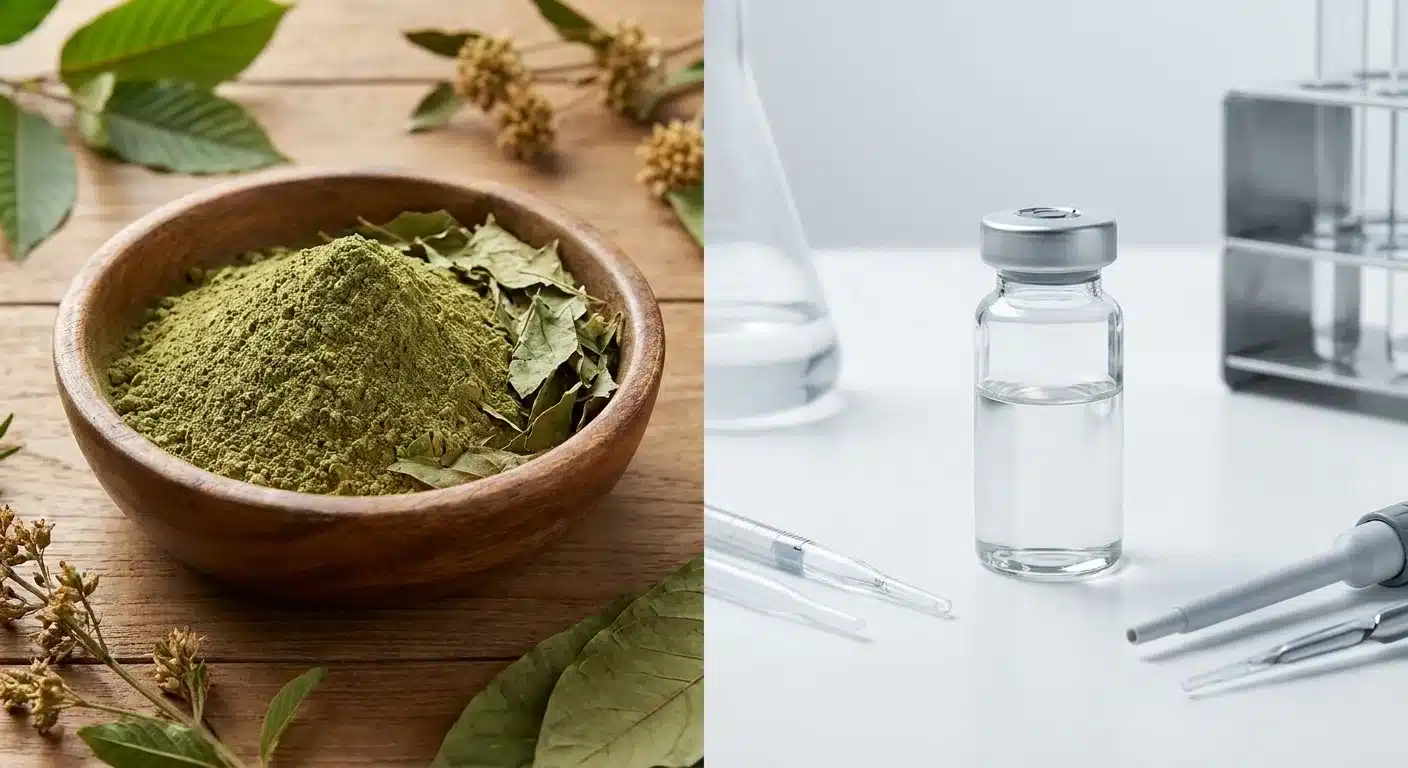
The resulting products — typically liquids, gummies, or capsules marketed as “7-OH shots” or “7-hydroxymitragynine isolate” — deliver milligrams of highly enriched 7-OH (typically 70–80% purity, with the remainder consisting of unknown oxidation products and impurities) per dose. Compare that to the <0.2 mg of 7-OH in a typical 2g serving of kratom powder. The pharmacological difference is not subtle.
7-OH Tablets and the 2023–2025 Product Surge
The fastest-growing isolated 7-OH product category since late 2023 has been pressed tablets, sold in smoke shops, gas stations, convenience stores, and online. Single-tablet doses commonly fall in the 5–30 mg range, with multi-pack formats designed for repeat dosing. Alongside tablets, concentrated 7-OH also reaches consumers as gummies, drink mixes, and shot bottles — the same product groupings the FDA used in its July 2025 enforcement actions described later in this article. Scientists have begun characterizing these products by their own name rather than treating them as a kratom subtype.
Alsbrook et al. (2025) describes a rapid rise in availability of concentrated and semi-synthetic 7-OH products marketed as “kratom” but pharmacologically and toxicologically distinct from kratom leaf, with marketing in confectionary formats raising specific pediatric-exposure concerns. [10] Brown et al. (2026) reported 7-OH levels in commercial samples that fell well outside the range of authentic whole-leaf material, consistent with synthetic addition rather than botanical origin, with the chromatographic profile of these products lacking other naturally occurring kratom alkaloids. These products also were found to contain unknown peaks not found in kratom leaf material, indicating that additional, unidentified chemicals are present in 7-OH products, increasing the risk of use. [9] The shift from leaf to isolated tablet/shot/gummy products is the central driver behind state legislative activity and the federal enforcement steps now underway.
Products can also be mislabeled. Some vendors sell “kratom extract” with undisclosed 7-OH concentrations. Without a COA showing the 7-OH percentage specifically, consumers cannot assess what they are actually taking.
What Is 7-OH Adulteration in Commercial Kratom?
A 2016 study by Lydecker et al. in Drug Testing and Analysis tested 28 commercially available kratom products and found that several contained 7-OH at concentrations inconsistent with natural whole-leaf kratom. [4] The authors concluded these products were likely adulterated with synthetic 7-OH — a practice motivated by the compound’s high potency, which allows vendors to produce a stronger-feeling product from lower-alkaloid starting material.
The adulteration story has only sharpened since then. Brown et al. (2026) in the Journal of AOAC International re-tested commercial product samples marketed as kratom and documented elevated 7-OH levels far outside the range of authentic leaf material — consistent with spiking or use of chemically concentrated starting material rather than straight botanical powder. [9] Alsbrook et al. (2025) in Pharmaceutical Biology frame this shift explicitly as an evolution — from kratom as a traditional remedy to a distinct category of 7-OH-enriched products whose public-health profile does not match the whole-leaf evidence base. [10] This is the core distinction that drives current state-level policy work: the compound in isolation, or concentrated well above natural leaf ratios, is not the same product as the powder it is sold beside.
Adulteration is a serious concern for several reasons:
- Consumers cannot know the actual 7-OH content without HPLC testing
- Effects from adulterated products can be dramatically different from expected whole-leaf effects
- Concentration inconsistency across batches creates unpredictable dosing
- Regulatory actions triggered by adulterated products affect the entire industry
This is one reason why COAs from AKA GMP-qualified vendors matter. A COA that explicitly reports 7-OH content (not just mitragynine) provides meaningful assurance that a product has not been spiked. At Amazing Botanicals, our COAs report 7-OH alongside mitragynine, and our products consistently show ND or trace 7-OH — consistent with authentic whole-leaf powder. See our lab testing page for current batch COAs.
| Product Type | Expected 7-OH in COA | Red Flag Result |
|---|---|---|
| Whole leaf powder (quality) | ND or <0.1 mg/g | >0.5 mg/g suggests adulteration |
| Kratom extract powder | Should be proportional to MG enrichment and make up no more than 1% of the total alkaloid fraction (sum of mitragynine, speciogynine, speciociliatine, and paynantheine) | 7-OH disproportionately high vs MG |
| Isolated 7-OH product | 7-OH listed as primary compound, mg/dose disclosed | No 7-OH disclosure at all |
| No COA available | — | Cannot assess; avoid |
What Does Research Show About 7-OH and Abuse Liability?
The most comprehensive preclinical comparison to date is Hemby et al. (2018) in Addiction Biology, which assessed both mitragynine and 7-OH in rat intravenous self-administration models — a standard method for evaluating abuse potential. [3]
Key findings from Hemby 2018:
- 7-OH, but not mitragynine, substituted for morphine in a rat self-administration paradigm and was self-administered on its own in a dose-dependent manner
- Mitragynine did not substitute for morphine and was not self-administered, indicating no detectable reinforcing effects in this model
- Prior exposure to 7-OH increased subsequent morphine intake, while prior exposure to mitragynine decreased it
- 7-OH self-administration was reduced by both μ1-selective (nalxonaxine) and δ-selective (naltrindole) opioid antagonists, implicating both receptor subtypes in its reinforcing effects
- The authors concluded that mitragynine does not have abuse potential and may even reduce opiate intake, while 7-OH has a high abuse potential and may also increase the intake of other opiates
These findings are often cited selectively by both sides of the kratom debate. The complete picture: 7-OH has selective opioid-like pharmacology and measurable abuse potential with dose-dependent increases in respiratory depression, while mitragynine is an atypical opioid receptor partial agonist with low abuse potential and a ceiling effect for respiratory depression. The ratio between the two in whole-leaf kratom is therefore pharmacologically important. [3]
Hemby and colleagues followed the 2018 self-administration work with a 2026 paper in Frontiers in Pharmacology that broadened the receptor characterization to lesser-known kratom alkaloids — epiallo-isopaynantheine, isopaynantheine, mitraciliatine, isospeciofoline, and speciophylline — at human µ-, κ-, and δ-opioid receptors. [11] Several of these minor alkaloids show distinctive functional profiles, including extreme G-protein signaling bias and, in the case of speciophylline, positive allosteric modulation at the human MOR without orthosteric binding. The relevance for the 7-OH conversation is indirect but real: kratom’s pharmacology cannot be reduced to mitragynine and 7-OH alone, and isolated 7-OH products strip out a structurally and functionally diverse alkaloid background whose contribution to whole-leaf effects is still being characterized.
A 2025 paper by Zuarth Gonzalez et al. in Journal of Pharmacology and Experimental Therapeutics reported a striking pharmacological distinction between the two alkaloids in rat plethysmography: 7-OH produced significant, dose-dependent respiratory depression (the potency to halve minute volume was about 4.5-fold greater than morphine), and that depression was fully reversed by naloxone. Mitragynine, by contrast, unexpectedly increased respiratory frequency through a mechanism not blocked by naloxone — i.e., independent of MOR activation. [13] The practical takeaway is that the respiratory risk profile of 7-OH-enriched products is qualitatively different from that of whole-leaf mitragynine exposure, and naloxone is an effective reversal agent for the 7-OH component.
Another study in a mouse model examined the respiratory depressant effects of morphine, mitragynine, and 7-OH using whole body plethysmography. Orally dosed 7-OH dose-dependently caused respiratory depression — measured by a change in minute volume — more potently (2×) than morphine. Mitragynine had a ceiling effect in producing respiratory depression (2.9× less potent than 7-OH), where doses above 10 mg/kg did not produce any greater effect. [17]
Studies have also examined the effects of test articles containing the full spectrum of kratom alkaloids. A study administered lyophilized kratom tea at a dose of 1.0 g/kg — representing a human equivalent dose of 36 mg mitragynine in a 60 kg individual — and saw only transient, mild respiratory depression and no conditioned place preference. This same research group also examined kratom alkaloid extract and purified mitragynine in measures of opioid withdrawal and found that there were significantly fewer withdrawal effects in both the extract and mitragynine groups compared to the morphine group. [18]
What this means practically: as whole-leaf kratom powder, with 7-OH at ND or trace levels, the pharmacological exposure is a complex mixture of alkaloids. Products that concentrate 7-OH represent a categorically different risk/benefit profile.
What Is the Regulatory Status of 7-OH vs. Kratom Leaf?
In the United States, kratom (including whole-leaf powder) is not federally scheduled. In 2016, the DEA proposed emergency scheduling of both mitragynine and 7-OH as Schedule I substances, but withdrew the proposal following significant public comment and Congressional input. Kratom itself remains in a legal gray zone at the federal level.
7-OH, however, has attracted specific regulatory attention at the state level precisely because of the isolated product market. Florida’s Kratom Consumer Protection Act (HB 179 / SB 136, 2023) specifically targeted synthetic and concentrated 7-OH products while largely leaving traditional whole-leaf kratom in place — an explicit regulatory distinction between the compound in isolation vs. as part of the whole plant.
Florida HB 179 / SB 136 (2023) caps 7-OH content at 400 ppm (0.04% by weight) in finished kratom products and limits the 7-OH-to-mitragynine ratio to 2%. The law specifically targets synthetic and concentrated 7-OH products while leaving traditional whole-leaf kratom in place.
Federal action accelerated sharply in 2025. On July 15, 2025, the FDA issued seven warning letters to companies marketing concentrated 7-OH products — described in the agency’s own language as “tablets, gummies, drink mixes, and shots” — for illegally selling unapproved drugs and unauthorized food/dietary-supplement ingredients. Two weeks later, on July 29, 2025, the FDA recommended to the U.S. Drug Enforcement Administration that 7-hydroxymitragynine be classified as a Schedule I controlled substance under the Controlled Substances Act; the DEA holds final authority on scheduling, and the rulemaking process — which includes public comment — is still in progress as of April 2026. On December 2, 2025, the FDA announced the seizure of approximately 73,000 units of 7-OH products (valued at roughly $1 million) from three firms in Missouri. Throughout these actions, the FDA has been explicit that the focus of enforcement is concentrated and semi-synthetic 7-OH products, not whole-leaf kratom.
Several other states have considered or enacted similar distinctions. The trend in kratom legislation is increasingly toward treating isolated alkaloids differently from whole-leaf botanical products — which tracks with the science of how natural concentrations differ from synthetically prepared isolates.
For AB’s position on kratom’s legal status by state, see our kratom legality guide.
How Do COAs Report 7-OH, and What Should You Look For?
A quality COA from an ISO-accredited lab will report both mitragynine and 7-hydroxymitragynine as separate line items, expressed as percentage of product weight or as mg/g.
For whole-leaf kratom powder, what you want to see:
- Mitragynine: 1.2–2.5% (12–25 mg/g) for typical whole-leaf kratom powder. Premium or specially cultivated leaf may reach ~3%. Concentrated extracts and resins can show 4–7%+ but are no longer whole-leaf products. Note: the often-cited 6%+ figure from Kikura-Hanajiri (2009) was measured in resin samples, not whole leaf.
- 7-OH: ND (not detected) or <0.1 mg/g
- 7-OH:MG ratio: should be very low; high ratios (>1:50) in powder products warrant scrutiny
For kratom extracts, mitragynine will be concentrated proportionally. 7-OH should still be detectable at proportional (not disproportionate) levels relative to the extraction method. If a 45% mitragynine extract shows unexpectedly high 7-OH, that may indicate chemical oxidation during processing or deliberate addition.
Always request the full COA — not a partial panel or a summary. If a vendor cannot produce a batch-specific HPLC COA showing 7-OH separately from mitragynine, that is a meaningful gap in transparency.
Why Does Amazing Botanicals Not Sell Isolated 7-OH?
In a decade running this business, I’ve watched the market trend toward higher and higher potency concentrates. Isolated 7-OH products were among the fastest-growing kratom-adjacent categories in 2022–2024. We chose not to participate, for reasons that track with the science rather than marketing incentives.
The case against isolated 7-OH products, as we see it:
- Pharmacological disconnect from whole-leaf kratom: At 10–25 mg of isolated 7-OH per shot, these products deliver a dose roughly 50–125× the amount of 7-OH in 2g of whole-leaf kratom powder. That is not a concentrated version of kratom — it is a different product.
- Absence of counterbalancing alkaloids: Whole-leaf kratom contains corynantheidine (a partial MOR antagonist), speciociliatine, paynantheine, and dozens of other compounds. These may modulate the effects of the most abundant alkaloids. Isolated 7-OH removes all of that context.
- Regulatory trajectory: State-level restrictions on isolated 7-OH are accelerating. Products we could not reliably sell in Florida two years later were not a good long-term bet.
- AKA GMP standards: As an AKA GMP-qualified vendor, we operate under quality standards that emphasize transparency and consumer safety. Selling a product with this potency profile and limited human research would be inconsistent with that framework.
This is not a claim that our whole-leaf products are risk-free, or that 7-OH will never have legitimate medical applications. It’s a decision based on proportionality: the concentration in isolated products bears no relationship to what kratom’s traditional use profile looks like, and the science doesn’t yet exist to characterize its long-term human safety.
Frequently Asked Questions
Is 7-hydroxymitragynine the same as kratom?
No. 7-OH is one of dozens of alkaloids found in the kratom plant, present at trace or undetectable levels in whole-leaf kratom powder. Kratom is the plant and its minimally processed forms (powder, capsules, tea); 7-OH is a single compound isolated from or chemically derived from that plant. Isolated 7-OH products are not kratom by any reasonable botanical or traditional definition. The pharmacological profile of concentrated 7-OH isolate — high MOR agonism delivered in milligram doses — is fundamentally different from the mixed-alkaloid profile of kratom leaf at normal serving sizes.
Does whole-leaf kratom contain any 7-OH at all?
In properly dried and handled whole kratom leaf, 7-OH is typically non-detectable by HPLC or UPLC or present below 0.05% w/w (0.5 mg/g). At a 2g serving, that’s under 1 mg total. By contrast, isolated 7-OH products typically deliver 10–25 mg per dose. So while 7-OH is a naturally occurring minor alkaloid, its natural concentration is orders of magnitude lower than what’s found in concentrated products. A COA for authentic kratom powder should show ND or trace 7-OH.
Most authentic kratom products contain 7-OH well below 1% — the documented median across hundreds of US commercial powder products is ~0.01%, with one liquid extract reaching 0.21% (Sharma 2025). Products with 7-OH approaching or exceeding 1% of the alkaloid fraction should be evaluated carefully, but a product is not necessarily adulterated if 7-OH is below 1% as long as mitragynine remains the most abundant alkaloid.
Verify that mitragynine is the most abundant alkaloid on the COA. Mitragynine being the dominant alkaloid is a hallmark of authentic Mitragyna speciosa — related Mitragyna species (M. hirsuta, M. javanica) do not produce meaningful quantities of mitragynine. A “kratom” product where mitragynine is not the most abundant alkaloid may not be M. speciosa at all, or may be heavily adulterated.
Why is 7-OH so much more potent than mitragynine?
The hydroxyl group at position 7 of the indole ring increases the molecule’s affinity for the MOR binding pocket. In in vitro guinea pig ileum assays measuring smooth-muscle twitch suppression, 7-OH shows approximately 46× the potency of mitragynine — see the endpoint-specific table above for in vivo data. The pharmacology of mitragynine is described as “atypical” — it recruits different signaling pathways than classical opioids and shows partial rather than full agonism. 7-OH, though also atypical, appears to function more like a conventional MOR agonist in vivo. The structural difference is small; the pharmacological difference is large.
If mitragynine converts to 7-OH in the body, is kratom really just an opioid?
Not exactly. Yes, the liver metabolizes some mitragynine to 7-OH via CYP3A4 (Kruegel 2019), and 7-OH has MOR agonist activity. After oral mitragynine ingestion, the body converts a meaningful fraction — 15–25% of parent drug exposure — into 7-OH via CYP3A enzymes. This crosses the 10% FDA threshold under the agency’s Metabolites in Safety Testing (MIST) guidance, which triggers requirements for independent safety evaluation of the metabolite. The metabolic pathway is therefore pharmacologically meaningful and regulatorily significant, but the absolute concentrations of 7-OH generated this way remain far below what isolated 7-OH products deliver directly to the bloodstream. This is not an apples-to-apples comparison — the metabolic pathway does not approximate the pharmacology of taking concentrated 7-OH. Mitragynine also acts on α2-adrenergic, serotonin, and dopamine receptors — contributing to effects that classical opioids don’t produce. The “kratom is just an opioid” framing is too reductive; so is “kratom has nothing to do with opioid receptors.” The more accurate picture is a complex botanical with opioid-pathway involvement, partly mediated through 7-OH metabolite formation, but not equivalent to opioid drugs pharmacologically or clinically.
Can you detect 7-OH adulteration from a COA?
Yes — if the COA reports 7-OH explicitly. A whole-leaf powder COA showing 7-OH at 1 mg/g or higher would be highly anomalous and consistent with adulteration or chemical oxidation. The Lydecker 2016 study found multiple commercial products with 7-OH levels incompatible with authentic whole-leaf origin. This is why requesting a full HPLC or UPLC panel — not just a mitragynine number — matters. A vendor who only reports mitragynine is not providing full transparency. Look for a COA that reports both compounds from a named, ISO-accredited lab.
What states have restricted isolated 7-OH?
Florida’s Kratom Consumer Protection Act (HB 179 / SB 136, 2023) specifically targeted synthetic and concentrated 7-OH products, distinguishing them from traditional kratom leaf. Several other states are considering or have enacted similar provisions. The regulatory trend is to separate isolated alkaloid products from the botanical. Because this is an evolving legal landscape, check our kratom legality guide for current state-by-state status, or consult a local attorney for legal advice specific to your situation.
Is the Hemby 2018 study the definitive word on 7-OH abuse liability?
It’s the most comprehensive published preclinical rat self-administration study to date, but it’s not the final word. The authors compared 7-OH and mitragynine against morphine and concluded that 7-OH should be considered a kratom constituent with high abuse potential — it was self-administered in a dose-dependent manner and substituted for morphine — while mitragynine did not substitute for morphine, was not self-administered, and may even reduce opiate intake. Human clinical data on 7-OH is extremely limited. The 2025 bidirectional breathing study by Zuarth Gonzalez et al. added new respiratory safety data, showing 7-OH depresses breathing while mitragynine does not. [13] As the isolated 7-OH product market expands, more human pharmacological data will likely emerge. Current evidence supports treating isolated 7-OH products differently from whole-leaf kratom, but the field is not settled.
Should I be concerned about 7-OH in standard kratom powder?
Not specifically. In whole-leaf kratom powder from a quality vendor with a full-panel COA showing ND or trace 7-OH, the compound is not present at significant concentrations. The concerns around 7-OH center on isolated/concentrated products, adulterated “kratom” spiked with synthetic 7-OH, and kratom extracts produced via chemical oxidation. If your kratom has a COA showing ND or <0.1 mg/g 7-OH alongside 1.2–1.8% mitragynine, that profile is consistent with authentic whole-leaf material and typical natural alkaloid ratios.
Does kratom extract contain more 7-OH than powder?
It depends on how the extract is made. A water-based or ethanol extraction that concentrates mitragynine without chemical modification should show 7-OH levels proportional to the extraction ratio — if a 10× extract concentrates everything tenfold, you’d expect 10× the 7-OH (still trace levels from authentic leaf). If an extract shows disproportionately high 7-OH relative to mitragynine, that’s a red flag suggesting chemical conversion or adulteration. Any kratom extract COA should report both alkaloids. See our guide on kratom products and extracts.
Why do some vendors market 7-OH products as “legal kratom”?
Because in most states, isolated 7-OH existed in a legal gray zone until recently, and the marketing leveraged kratom’s relatively higher acceptance. It’s a branding strategy, not a scientific or botanical classification. 7-OH isolate is chemically derived from kratom alkaloids but is not kratom by any botanical standard. The “legal kratom” framing is designed to capture consumers who are familiar with kratom’s reputation. Consumers should evaluate 7-OH products on their own terms — with their own pharmacological profile and risk considerations — not by comparison to whole-leaf kratom.
References
- Matsumoto, K., Horie, S., Ishikawa, H., et al. (2004). Antinociceptive effect of 7-hydroxymitragynine in mice: Discovery of an orally active opioid analgesic from the Thai medicinal herb Mitragyna speciosa. Life Sciences, 74(17), 2143–2155. [PubMed]
- Kruegel, A.C., Uprety, R., Grinnell, S.G., et al. (2019). 7-Hydroxymitragynine is an active metabolite of mitragynine and a key mediator of its analgesic effects. ACS Central Science, 5(6), 992–1001. [PubMed]
- Hemby, S.E., McIntosh, S., Leon, F., Cutler, S.J., & McCurdy, C.R. (2018). Abuse liability and therapeutic potential of the Mitragyna speciosa alkaloids mitragynine and 7-hydroxymitragynine. Addiction Biology, 24(5), 874–885. [PubMed]
- Lydecker, A.G., Sharma, A., McCurdy, C.R., et al. (2016). Suspected adulteration of commercial kratom products with 7-hydroxymitragynine. Journal of Medical Toxicology, 12(4), 341–349. [PubMed]
- Kamble, S.H., Sharma, A., King, T.I., et al. (2019). Metabolite profiling and identification of enzymes responsible for the metabolism of mitragynine, the major alkaloid of Mitragyna speciosa (kratom). Xenobiotica, 49(11), 1279–1288. [PubMed]
- Kikura-Hanajiri, R., Kawamura, M., Maruyama, T., et al. (2009). Simultaneous analysis of mitragynine, 7-hydroxymitragynine, and other alkaloids in the psychotropic plant kratom by LC-MS. Forensic Toxicology, 27(2), 67–74. [DOI]
- Sharma, A., Smith, K.E., Kuntz, M.A., Berthold, E.C., et al. (2025). Chemical Analysis and Alkaloid Intake for Kratom Products Available in the United States. Drug Testing and Analysis, 17(10), 1974–1984. [PubMed]
- Trakulsrichai, S., Sathirakul, K., Auparakkitanon, S., et al. (2015). Pharmacokinetics of mitragynine in man. Drug Design, Development and Therapy, 9, 2421–2429. [PubMed]
- Brown, P.N., Chan, M., Zhang, X., et al. (2026). Elevated 7-hydroxymitragynine levels found in products misbranded as kratom. Journal of AOAC International. [PubMed]
- Alsbrook, S., Pro, G., Koturbash, I., et al. (2025). From kratom to 7-hydroxymitragynine: evolution of a natural remedy into a public-health threat. Pharmaceutical Biology. [PubMed]
- Hemby, S.E., Rangel-Grimaldo, M., McIntosh, S., et al. (2026). Multifaceted modulation of human opioid receptors by kratom alkaloids: binding affinity, functional selectivity, and allosteric activity. Frontiers in Pharmacology. [PubMed]
- Berthold, E.C., Kamble, S.H., Raju, K.S., Kuntz, M.A., Senetra, A.S., Mottinelli, M., et al. (2022). The lack of contribution of 7-hydroxymitragynine to the antinociceptive effects of mitragynine in mice: a pharmacokinetic and pharmacodynamic study. Drug Metabolism and Disposition, 50(2), 158–167. [PubMed]
- Zuarth Gonzalez, J.D., Ragsdale, A.K., Mukhopadhyay, S., McCurdy, C.R., McMahon, L.R., Obeng, S., & Wilkerson, J.L. (2025). Mitragynine and 7-hydroxymitragynine: Bidirectional effects on breathing in rats. Journal of Pharmacology and Experimental Therapeutics, 392(11), 103720. [PubMed]
- Takayama, H., Ishikawa, H., Kurihara, M., Kitajima, M., Aimi, N., Ponglux, D., Koyama, F., Matsumoto, K., Mizuta, T., Takayama, T., Murayama, T., & Horie, S. (2002). Studies on the synthesis and opioid agonistic activities of mitragynine-related indole alkaloids. Journal of Medicinal Chemistry, 45(9), 1949–1956. [PubMed]
- Matsumoto, K., Hatori, Y., Murayama, T., et al. (2006). Involvement of MORs in antinociception and inhibition of gastrointestinal transit induced by 7-hydroxymitragynine. European Journal of Pharmacology, 549(1-3), 63–70. [PubMed]
- Horie, S., Koyama, F., Takayama, H., et al. (2005). Indole alkaloids of a Thai medicinal herb, Mitragyna speciosa, that has opioid agonistic effect in guinea-pig ileum. Planta Medica, 71(3), 231–236. [PubMed]
- Hill, R., Kruegel, A.C., Javitch, J.A., et al. (2022). The respiratory depressant effects of mitragynine are limited by its conversion to 7-OH mitragynine. [PMC9314834]
- Wilson, L.L., Harris, H.M., Eans, S.O., et al. (2020). Lyophilized kratom tea: in vitro and in vivo characterization of an oral kratom preparation. [PubMed]
- Tanna, R.S., Cech, N.B., Oberlies, N.H., et al. (2021). Drug interaction potential of kratom: A comprehensive review and inhibitory potential of mitragynine and 7-hydroxymitragynine on common CYP and UGT enzymes. [PubMed]
- Behnood-Rod, A., Chellian, R., Wilson, R., Hiranita, T., Sharma, A., Leon, F., et al. (2021). Evaluation of the rewarding effects of mitragynine and 7-hydroxymitragynine in an intracranial self-stimulation procedure in male and female rats. [PMC8164968]
- Obeng, S., et al. (2022). Activity of Mitragyna speciosa (“Kratom”) alkaloids at serotonin receptors. [PMC9235362]
- Hanapi, N.A., et al. (2025). Alkaloid biosynthesis in medicinal crop kratom varies with postharvest, genetic, and seasonal factors. Frontiers in Plant Science. [Frontiers]
- Mongar, P., Jaisi, A., Inkviya, T., Wungsintaweekul, J., & Wiwattanawongsa, K. (2024). Effects of itraconazole on pharmacokinetics of mitragynine and 7-hydroxymitragynine in healthy volunteers. ACS Pharmacology & Translational Science, 7(3), 823–833. [PubMed]
- Kamble, S.H., Obeng, S., León, F., Restrepo, L.F., King, T.I., Berthold, E.C., et al. (2023). Pharmacokinetic and pharmacodynamic consequences of cytochrome P450 3A inhibition on mitragynine metabolism in rats. Journal of Pharmacology and Experimental Therapeutics, 385(3), 180–192. [PubMed]
Disclaimer: This article is for educational purposes only and is not wellness advice. Kratom is not FDA-approved to diagnose, manage, resolve, or prevent any condition. Consult a qualified healthcare provider before starting, changing, or stopping any supplement regimen.
Browse our concentrated kratom extracts.

Shop Lab-Tested Kratom
Browse our full selection of AKA GMP-qualified kratom — powder, capsules, extracts, and more. Free shipping on orders $99+.
Shop All Kratom